
Appalachian Churches Series – The First Presbyterian Church of Pikeville: From Mission Church to Mountain Institution
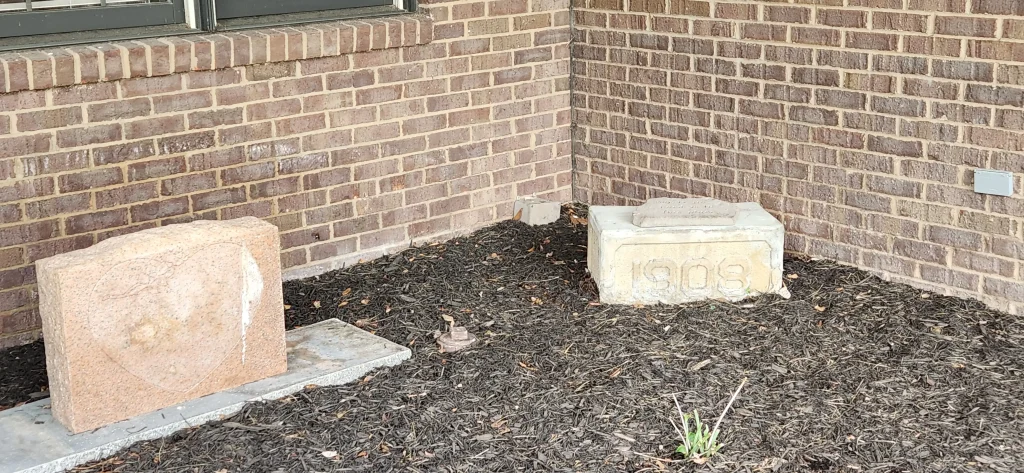
A stone resting beside the brick walls of First Presbyterian Church in Pikeville carries a simple date: 1908. In the photographs accompanying this article, it sits low to the ground, easily overshadowed by the tall church tower, stained glass, and long row of classrooms stretching toward the mountains. Yet that date opens a door into a much larger story.
The Presbyterian congregation in Pikeville is older than the stone, older than the church building associated with it, and even older than Pikeville Collegiate Institute, the school that eventually became the University of Pikeville. Its story began in 1883, when two Presbyterian ministers traveled into the Big Sandy Valley to determine whether churches could take root in the mountains of eastern Kentucky.
What followed was more than the founding of a congregation. First Presbyterian Church became closely tied to one of the most important educational institutions in eastern Kentucky, sent ministers and missionaries far beyond Pike County, survived devastating floods, and served generations of families whose names became part of Pikeville’s civic history.
A Presbyterian Mission Up the Big Sandy
Early in 1883, Ebenezer Presbytery asked the Rev. James P. Hendrick of Flemingsburg and the Rev. W. C. Condit of Ashland to survey the Big Sandy Valley. According to the congregation’s centennial history, the purpose was straightforward: the Presbytery hoped to establish Presbyterian churches in the region. Hendrick spent considerable time in Pikeville during the summer and fall, meeting residents and laying the groundwork for a permanent congregation.
On October 30, 1883, nine Pikeville residents gathered inside the Methodist church. They were James R. Smith, Martha J. Smith, Charles M. Parsons, Malicia J. Parsons, Mary M. Stewart, James B. Auxier, Mary J. Connolly, W. Mayo Connolly, and James L. Robinson. At that meeting they decided to organize a Presbyterian church.
Charles M. Parsons, James R. Smith, and W. Mayo Connolly were elected as the congregation’s first elders, while Connolly became clerk of the Session, a position he held until his death in 1897. Hendrick continued his work in the area and was later remembered by the congregation as the guiding figure during the church’s earliest years.
The first regular pastor was the Rev. A. C. Stewart. His annual salary of $500 was paid by the Presbyterian Home Mission Board, showing that the Pikeville congregation began as part of a broader denominational missionary effort rather than as an entirely self-supporting local church. By May 1886, the congregation had organized its first Sunday school under Charles M. Parsons.
The church had been established, but it still did not have a permanent house of worship of its own.
A Church Before It Had a Church Building
For its first years, the Presbyterian congregation continued meeting in Pikeville’s Methodist church. That arrangement reflected the realities of a small Appalachian town where denominational institutions were still developing and congregations sometimes depended upon one another for physical space.
A major change came when the Rev. David Blyth was called as pastor. Blyth, Hendrick, and Condit became involved in another Presbyterian project that would shape Pikeville far beyond the walls of the church: the creation of a school.
The congregation’s own history records that the Presbyterian leaders surveyed the area for such an institution and that Pikeville Collegiate Institute was established in 1889. Once the new school building on College Street was ready, the Presbyterian congregation moved its worship services there. The church would continue worshiping in the school building until its own sanctuary was completed in 1910.
That chronology is important. Pikeville Collegiate Institute did not create First Presbyterian Church. The congregation had already existed for six years. Instead, the church and the educational movement grew together, each becoming part of a Presbyterian effort to establish permanent institutions in the Kentucky mountains.
The Church That Helped Build a College
On November 1, 1888, Ebenezer Presbytery purchased three acres on what is now College Street for $1,666.66. David Blyth became both minister of First Presbyterian Church and principal of the new Pikeville Collegiate Institute. The school opened on September 16, 1889, with 125 students and tuition of $8.
The old Academy Building therefore served more than one purpose. It was a school, a chapel, a community gathering place, and for years the regular home of the Presbyterian congregation. Kentucky’s historical marker for the building similarly identifies it as a Presbyterian institution constructed in 1889 and notes that its bricks were fired on the site using clay from the nearby riverbank.
The connection between church and school was not merely symbolic. In 1896, the Kentucky Court of Appeals considered Pikeville Collegiate Institute as part of a case concerning the taxation of charitable educational institutions. The court recorded that the institute was managed by Ebenezer Presbytery of the Presbyterian Church, offered general education at little or no cost, and operated without personal profit. It is unusually strong contemporary legal evidence for the Presbyterian character and charitable purpose of the institution during its earliest years.
For many years the two institutions even shared leaders. In 1899, the Rev. James F. Record became both president of the school and pastor of First Presbyterian Church. Record remained pastor until 1905 and president until 1911, then returned to lead the school again from 1916 until his retirement in 1932. The church’s centennial history remembered him as one of the figures who carried both institutions through difficult early years when money was scarce and their futures were far from guaranteed.
The institution begun by Presbyterians in 1889 eventually grew from Pikeville Collegiate Institute into Pikeville College and finally the University of Pikeville. The university still identifies the Presbyterian educational mission as the beginning of its institutional history.
Building a Permanent Church on Huffman Avenue
By the opening years of the twentieth century, First Presbyterian had grown enough to begin planning for a permanent sanctuary independent of the college.
In February 1906, the congregation purchased a lot from Mrs. L. F. Mays for $1,000. It paid $110 immediately, with the remainder due in installments over the following three years. A report to Presbytery that April listed 110 members. By October 1907, the congregation had appointed a committee to raise money for construction, and by March 1908 membership had reached 132.
Here the historical record produces an interesting difference in dates.
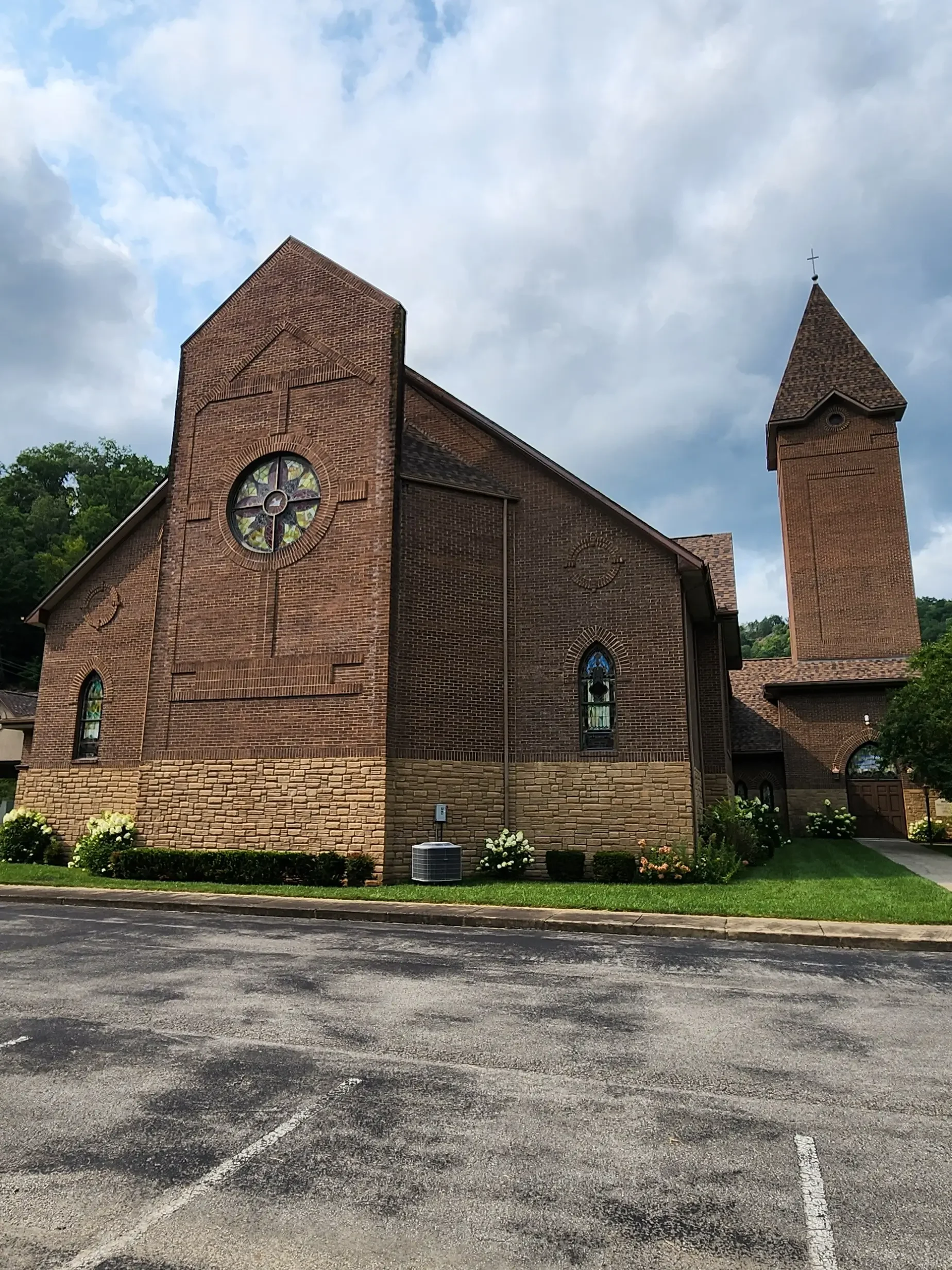
The Kentucky Historic Resources Inventory prepared in 1983 dates the First Presbyterian Church at 121 Huffman Avenue to 1908. The survey describes it as a Gothic Revival brick church with stone and glass details and calls particular attention to its unusual stained-glass windows. The larger National Register documentation likewise praised the Presbyterian church’s Gothic windows and especially fine stained glass.
The congregation’s centennial history, however, records the formal dedication on December 18, 1910, when W. C. Condit returned to Pikeville to preach the dedicatory sermon.
These dates need not contradict one another. The safest interpretation is that the church’s building campaign belongs to the period from about 1908 through 1910, with 1908 remembered as a significant construction date and the completed sanctuary formally dedicated in December 1910. The surviving stone marked “1908” photographed with the church provides a tangible reminder of that earlier date.
The dedication must also have carried special meaning for Condit. Nearly three decades earlier he had helped survey the Big Sandy Valley for Presbyterian work. He returned to dedicate a permanent church in a town where that missionary effort had already produced both a congregation and a school.
Growth, Families, and a Larger Church
First Presbyterian expanded steadily during the early twentieth century. The old membership reports preserved in the centennial history reveal the scale of that growth. Presbytery recorded 338 members in 1931, 411 in 1933, and 485 by April 1934. When McVeigh Presbyterian Church was organized the following month, twenty-eight members transferred from First Presbyterian to the new congregation.
The growth created a practical problem. More people required more space.
In September 1937, the congregation began planning a Sunday school addition. During the following months, the women of First Presbyterian raised $7,200 in cash and pledges toward the project, a considerable sum during the final years of the Great Depression. The addition was completed in the fall of 1938 at a cost of approximately $15,000.
That addition was part of a pattern that would continue throughout the church’s history. The congregation repeatedly altered and expanded its physical space as Sunday school, youth programs, music, community service, and other ministries became larger parts of church life.
The names appearing in the early church records also read like a cross section of Pikeville history: Smith, Parsons, Auxier, Connolly, Ratliff, Huffman, York, Dils, Call, Hatcher, Forsyth, Sowards, McCoy, and others. First Presbyterian was becoming not simply a missionary outpost, but an institution woven into the developing town.
A Mission That Reached Beyond Pikeville
Although the church was rooted in Pikeville, its members and ministers repeatedly carried their work beyond the city.
The Rev. J. H. Forsyth arrived in Pikeville in 1902 as a Sunday school missionary and established chapels elsewhere in Pike County. Other members entered the ministry themselves. Ruth and Marjorie Harman, daughters of longtime church leaders T. H. and Mrs. Harman, became foreign missionaries. Ruth served in Persia, now Iran, while Marjorie worked in Yucatan, Mexico.
One of the more remarkable stories involved the Rev. Leonard S. Hogenboom. After serving as pastor in Pikeville, Hogenboom resigned in August 1939 to become a missionary under the Board of Foreign Missions and was sent to the Philippines. During World War II, he and his family became prisoners of the Japanese and remained captive for more than two years.
The war affected Pikeville directly as well. Because regular pastors were difficult to obtain, the Board of Foreign Missions eventually sent the Rev. Harry J. Hill to serve the church. Hill and his wife had been missionaries in Korea but were back in the United States because of the war. They remained with the Pikeville congregation until 1946, when conditions allowed them to return to Korea.
These stories placed a congregation in the Big Sandy Valley within a much wider Presbyterian world. Ministers and members moved between Pikeville, mission fields, colleges, denominational boards, and churches across the country and overseas.
The Flood of 1957
Pikeville’s geography has always shaped its history. The city developed along the Levisa Fork of the Big Sandy River, hemmed in by mountains and dependent upon precious flat land along the valley floor. The same rivers that supported settlement and commerce could become destructive during periods of heavy rain.
First Presbyterian learned that lesson dramatically in January 1957.
Floodwater entered the church and rose into the first floor. Afterward, the congregation received assistance from several sources, including $12,000 from the Presbyterian One Great Hour of Sharing Fund. Repairs followed, and on October 20, 1957, services were held to dedicate new sanctuary lights, new hymnbooks, and the renovated church.
The episode was more than a building repair. Like so many churches, businesses, homes, and public institutions in the Appalachian river towns, First Presbyterian had to rebuild while its members were simultaneously dealing with damage in the surrounding community.
The church survived, repaired its sanctuary, and continued.
Generations Within the Same Congregation
By the 1960s, First Presbyterian had existed long enough for its own history to become a family inheritance.
Church records noted an unusual moment in April 1961 when members of one communicants class represented the third, fourth, and fifth generations of church families. Charles Justice Baird represented the third generation, William Ferrell Forsyth Jr. the fourth, and Charles Bowles Chrisman Jr. the fifth.
At the same time, the congregation was changing with the broader church and American society. Young people from Pikeville participated in a work camp in Baltimore in 1965. A Calvin Club was organized for younger children the following year. In January 1968, Mrs. W. B. “Betty” Stone became the first woman elected as an elder of First Presbyterian Church.
The relationship with Pikeville College also remained alive long after the era when the same minister routinely led both institutions. In May 1976, the church created four choral tuition scholarships for Pikeville College students. The arrangement was intended to strengthen the church choir while providing additional scholarship assistance for students.
Nearly ninety years after Presbyterians had opened Pikeville Collegiate Institute, church and college were still finding ways to support one another.
The Flood of 1977
In the fall of 1976, the congregation undertook another major renovation of the Huffman Avenue church. Work included roof repairs, changes to the choir area, basement improvements, new carpeting, and protective coverings for the stained-glass windows.
Then the water returned.
The April 1977 flood completely filled the church basement. The damage brought assistance from far beyond Pikeville. By the end of May, approximately $14,000 had been received from individuals and churches, with contributions coming from places as distant as Greensboro, North Carolina, New Jersey, and Brazil. The money was used to help both the church and members affected by the flood.
That same year, records reviewed by the congregation indicated that approximately 2,000 people had joined First Presbyterian since its founding in 1883. Membership stood at 294 at the end of 1977.
Two major floods in twenty years had damaged the church, yet neither ended its work. In both cases the congregation repaired its building and continued serving Pikeville.
Service Beyond Sunday Morning
The centennial records show that First Presbyterian increasingly defined its work outside regular worship services.
The church’s deacons spent approximately $6,700 on a 1979 Christmas project that helped about twenty-three families with eighty children. During the summer of 1980, another $3,500 went toward a program in Pikeville’s city park.
The Rev. Edwin N. Grigsby became pastor in September 1980 after a period in which the congregation had been without a regular minister. During 1980, the church reported receiving and distributing nearly $124,000, with approximately $60,000 devoted to benevolences and $64,000 to the local church program.
In 1982 the church’s young people organized a Clown Ministry that performed at First Presbyterian, other churches, nursing homes, and the hospital. Deacons began recording Sunday morning worship services and carrying tapes and players to people unable to attend. The congregation also restored the practice of taking communion to shut-ins. By the end of 1982, membership stood at 320, and the church had adopted a $133,000 budget for 1983.
Those activities help explain why a church history cannot be measured simply by membership rolls or buildings. By the time First Presbyterian celebrated its centennial, its work stretched through hospitals, nursing homes, parks, schools, households, mission fields, and charitable programs.
The Historic Church on Huffman Avenue
When historic preservationists surveyed Pikeville in 1982 and 1983, First Presbyterian remained an important part of the downtown architectural landscape.
The Kentucky Historic Resources Inventory identified the church at 121 Huffman Avenue as a Gothic Revival building dating from 1908. The larger National Register nomination described the Presbyterian and Methodist churches on Huffman Avenue as significant examples of Pikeville’s early twentieth-century religious architecture. The Presbyterian church was distinguished particularly by its Gothic windows and stained glass.
The Huffman Avenue Historic District entered the National Register of Historic Places in 1984. In the documentation associated with that nomination, the First Presbyterian property was still connected with the congregation and the Rev. Edwin Grigsby.
The building represented several layers of Pikeville history at once. It was a religious landmark, an architectural landmark, a survivor of two major floods, and a reminder of the period when Pikeville was growing from a small mountain courthouse town into the commercial and institutional center of the upper Big Sandy Valley.
From Huffman Avenue to Cedar Creek Road
At some point after the historic survey, the congregation left its longtime Huffman Avenue location and established its church on Cedar Creek Road.
The exact relocation date has not surfaced in the digitized sources reviewed for this article, so it is better not to assign one without stronger documentary evidence. What can be established is that the congregation was still associated with Huffman Avenue in the 1983 National Register documentation, while newspaper notices from September 2000 clearly identified First Presbyterian Church on Cedar Creek Road.
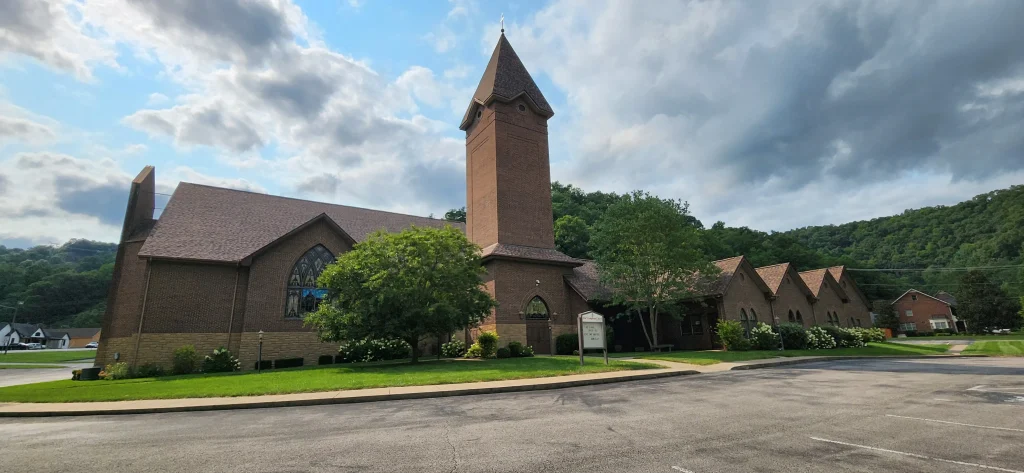
Today First Presbyterian Church is at 508 Cedar Creek Road. It remains a congregation of the Presbyterian Church (U.S.A.) and a member of Transylvania Presbytery. Its own description continues to place worship, education, and service at the center of its mission in eastern Kentucky.
The photographs accompanying this article show a substantial brick complex set against Pikeville’s wooded mountains, with a tall tower, pointed windows, stained glass, classrooms, and gathering spaces. Nearby, that preserved stone bearing the date 1908 provides a physical link with the congregation’s earlier building history.
The location changed. The institution did not disappear.
A Church and a College With a Shared Beginning
Few parts of First Presbyterian’s story are more important than its relationship with the institution now known as the University of Pikeville.
The church was organized in 1883. The Presbyterian school followed in 1889. David Blyth served both. James F. Record served both. The congregation worshiped in the school. Members and ministers supported the college. College officials served the church. Scholarship programs continued connecting the two institutions decades later.
Kentucky’s own historical marker describes Pikeville Collegiate Institute as having been established by the Presbyterian Church, while the University of Pikeville continues to trace its founding to the Presbyterian educational mission of the late nineteenth century.
That makes First Presbyterian’s story important beyond denominational history. The desire to establish a church in Pikeville helped produce an educational movement whose influence eventually reached thousands of Appalachian students.
A small gathering of nine Pikeville residents in a borrowed Methodist church therefore belongs to the history of higher education in eastern Kentucky as much as it belongs to the history of Presbyterianism.
Why First Presbyterian Church of Pikeville Matters
First Presbyterian Church has occupied several physical homes, beginning in another congregation’s church, moving into the Pikeville Collegiate Institute, establishing its own church on Huffman Avenue, and eventually making its home on Cedar Creek Road.
Its deeper history, however, is one of continuity.
The congregation helped create an educational institution that became the University of Pikeville. Its members established Sunday schools and chapels, entered the ministry, traveled overseas as missionaries, raised money for new educational space, assisted families in need, supported students, carried worship to shut-ins, and rebuilt after the waters of the Big Sandy entered their church.
The buildings matter because they preserve pieces of that history. The stained glass, the Gothic forms recorded by preservationists, the old College Street Academy, and the stone marked 1908 give the story a physical shape. Yet the church’s own centennial historian understood that the real history was larger than a structure. In closing the account of its first hundred years, he emphasized that he was recording not merely a house of worship, but generations of people.
More than 140 years after the October 1883 meeting, First Presbyterian remains part of Pikeville. Its history is written not only in brick and stained glass, but in college classrooms, mission fields, church minutes, floodwater, family names, charitable work, and the institutions that grew beside it.
The story that began with nine people meeting in a borrowed church became part of the larger story of Pikeville itself.
Sources & Further Reading
Chrisman, Norman A., Sr., and Charles B. Chrisman. “The Presbyterian Church: A Brief History, 100 Years, 1883–1983.” In Pike County, Kentucky 1821–1987: Historical Papers Number Six, 83–92. Pikeville, KY: Pike County Historical Society, 1987. The history was originally prepared for the congregation and is the strongest published source for its first century. https://archive.org/details/pikecountykentuc06maye
Hendrick, William J. Rev. James P. Hendrick, D.D.: Memoirs, with an Appendix Containing History of Ebenezer Presbytery and Other Papers. Cambridge, MA: Riverside Press, 1907. This is an especially valuable early source for James P. Hendrick and the Presbyterian movement that established work in the Big Sandy Valley. https://upload.wikimedia.org/wikipedia/commons/1/10/Rev._James_P._Hendrick%2C_D._D._Memoirs_with_an_appendix_containing_history_of_Ebenezer_presbytery_and_other_papers_%28IA_revjamesphendric00hend%29.pdf
Wilson, Samuel Tyndale. The Southern Mountaineers. New York: Literature Department, Presbyterian Home Missions, 1914. The book discusses Presbyterian church and educational work throughout the southern mountains and specifically describes Pikeville College in Pike County. https://upload.wikimedia.org/wikipedia/commons/a/aa/The_southern_mountaineers_%28IA_southernmountain00wil%29.pdf
Powell, Helen. “First Presbyterian Church.” Kentucky Historic Resources Inventory, Site PiP 10. Carman and Powell, Inc., March 1983. The survey records the church at 121 Huffman Avenue, dates it to 1908, identifies the Gothic Revival style, and describes its stained glass, brick, and stone construction. https://pikevilleky.gov/wp-content/uploads/2021/04/Huffman-Ave-Form.pdf
National Park Service. Huffman Avenue Historic District. National Register of Historic Places Registration Documentation, NRIS 84001927. Washington, DC: National Park Service, 1984. https://npgallery.nps.gov/NRHP/AssetDetail?assetID=17acea18-d844-45d5-afe3-8b4068e6d010
National Park Service. Pikeville College Academy Building. National Register of Historic Places Registration Documentation, NRIS 73000828. Washington, DC: National Park Service, 1973. This nomination is important for the building in which the Presbyterian congregation worshiped before completion of its Huffman Avenue church. https://npgallery.nps.gov/AssetDetail/NRIS/73000828
Kentucky Historical Society. “Pikeville Collegiate Institute.” Kentucky Historical Marker 1533. Kentucky Historical Marker Database. Accessed July 27, 2026. https://history.ky.gov/markers/pikeville-collegiate-institute
Kentucky Historical Society. “Pikeville College.” Kentucky Historical Marker 884. Kentucky Historical Marker Database. Accessed July 27, 2026. The marker identifies the school as a Presbyterian institution established in 1889 for mountain youth. https://history.ky.gov/markers/pikeville-college
City of Louisville v. Board of Trustees of Nazareth Literary and Benevolent Institution, 100 Ky. 518, 36 S.W. 994 (Ky. Ct. App. 1896). The consolidated decision includes the Trustees of Pikeville Collegiate Institute and identifies the school as being managed by Ebenezer Presbytery of the Presbyterian Church. https://case-law.vlex.com/vid/city-of-louisville-v-901785514
Presbyterian Historical Society. Presbyterian Church in the U.S.A. College Board Records, Record Group 32, box 23, folders 15–20, “Pikeville College, 1889–1924, 1932–1938.” Philadelphia: Presbyterian Historical Society. These archival files are among the strongest surviving primary-source collections for the Presbyterian educational mission at Pikeville. https://pcusa.org/historical-society/collections/research-tools/guides-archival-collections/rg-32
Presbyterian Historical Society. United Presbyterian Church in the U.S.A. Board of National Missions, Department of Health, Education and Welfare Records, Record Group 301.8. Philadelphia: Presbyterian Historical Society. The collection includes Southern Mountain mission and school material useful for placing Pikeville within the larger Presbyterian Appalachian mission. https://pcusa.org/historical-society/collections/research-tools/guides-archival-collections/rg-3018
Kinder, Alice J. Pikeville College Looks to the Hills, 1889–1989. Pikeville, KY: Pikeville College, 1990. This full institutional history contains extensive references to Record, Chrisman, Connolly, Blyth, Forsyth, Condit, Auxier, and other figures closely connected with First Presbyterian Church. https://en.geneanet.org/library/doc/748897/pikeville-college-looks-to-the-hills-1889-1989
Record, Margaret. The Beginnings of Pikeville College. N.p., n.d. This memoir by the wife of James F. Record is listed among the historical sources used in the National Register documentation for Pikeville’s historic resources. https://npgallery.nps.gov/GetAsset/9b7d3ea2-5322-41c6-8089-50ac0f2fca22
Elkins, Stella, and Marion Kelley. The First 75 Years of Pikeville College, 1889 to 1964: 75th Anniversary. Pikeville, KY: Pikeville College, 1964. The work was used as a source in the National Register nomination for the old Pikeville Collegiate Institute building. https://npgallery.nps.gov/GetAsset/2257ad11-5c5e-4942-8fd7-f238c37276b8
University of Pikeville. “UPIKE History.” Accessed July 27, 2026. The university records the Presbyterian founders, David Blyth, construction of the early school, and the September 16, 1889 opening of Pikeville Collegiate Institute with 125 students. https://www.upike.edu/about/history/
First Presbyterian Church of Pikeville. “Our Story.” Accessed July 27, 2026. The congregation’s current institutional history identifies 1883 as its founding year and documents its continuing presence in Pikeville. https://www.fpcpikeville.com/our-story
Presbyterian Church (U.S.A.). “First Presbyterian Church, Pikeville, KY.” Accessed July 27, 2026. The denominational directory identifies the congregation at 508 Cedar Creek Road and places it within Transylvania Presbytery. https://pcusa.org/congregation/first-church-pikeville-ky
Library of Congress. “The Pike County News (Pikeville, Ky.) 1926–1949.” Directory of U.S. Newspapers in American Libraries. Accessed July 27, 2026. This is an important primary newspaper source for church services, ministers, weddings, funerals, Sunday school activities, building work, and community events. https://www.loc.gov/item/sn85052041
Library of Congress. “Appalachian News-Express (Pikeville, Ky.) 1979–Current.” Directory of U.S. Newspapers in American Libraries. Accessed July 27, 2026. The 1983 issues are especially promising for contemporary coverage of the church’s centennial. https://www.loc.gov/item/sn83008583
Sanborn Map Company. Sanborn Fire Insurance Maps from Pikeville, Pike County, Kentucky. 1910, 1920, 1925, 1932, and 1949. These primary maps can help document the Huffman Avenue property and changes to the church complex through time. https://commons.wikimedia.org/wiki/Category:Sanborn_Fire_Insurance_Map_from_Pikeville,_Pike_County,_Kentucky
Author Note: I photographed First Presbyterian Church in Pikeville while researching the congregation’s long connection to the city and Pikeville College. Its story shows how faith, education, flood recovery, and community service became intertwined across generations in eastern Kentucky.