
Forgotten Appalachia Series – Inland Steel Company of Wheelwright
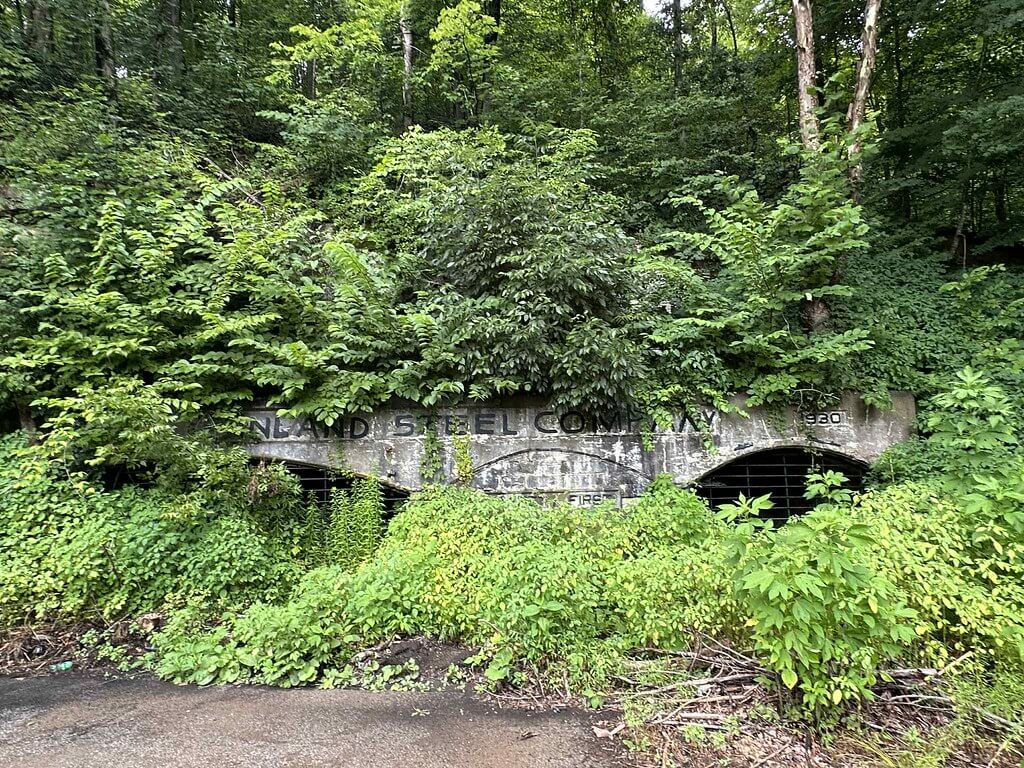
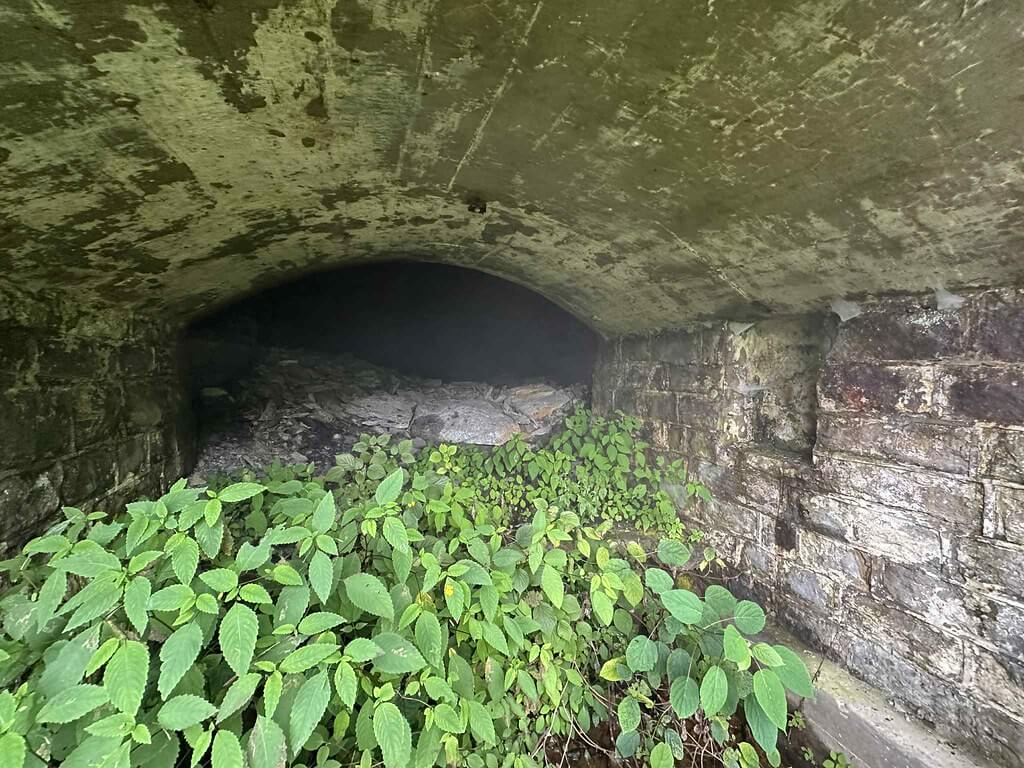
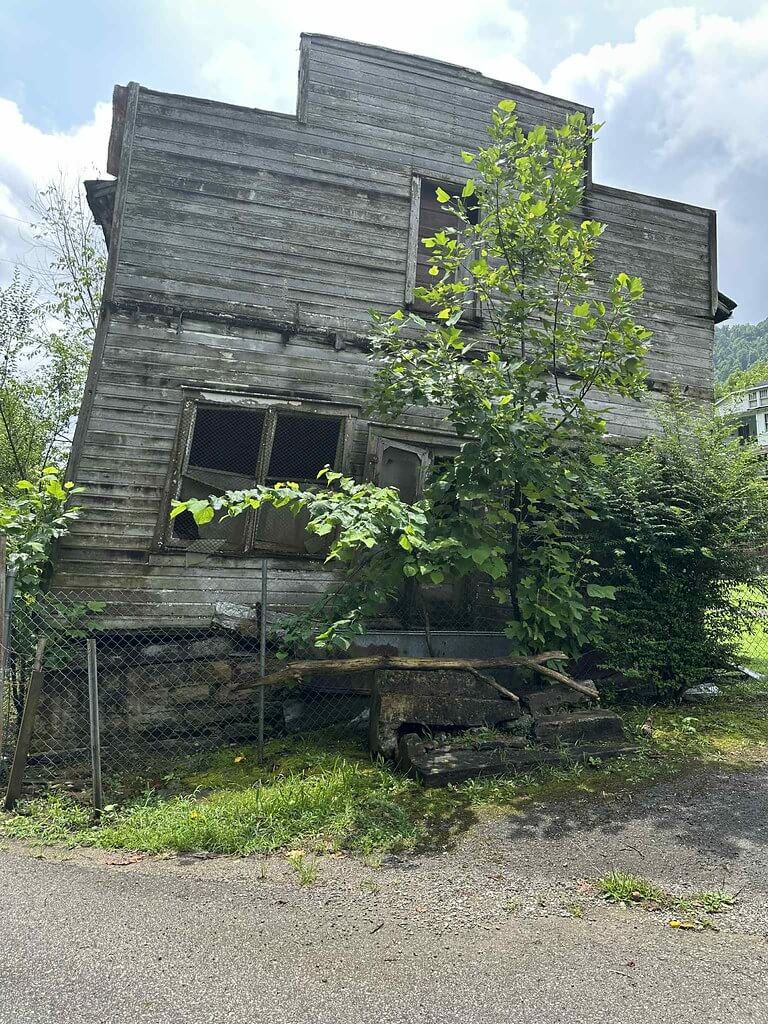
If you walk up Main Street in Wheelwright and look past the vines and peeling paint, you can still see Inland Steel’s vision in brick and concrete. The concrete mine portal that once swallowed mantrips of miners still bites into the hillside, the clubhouse and community building still anchor the commercial block, and the washhouse and hospital still hint at a time when a Chicago steel company tried to build a model community at the head of a Floyd County hollow. That story can be told in unusually fine detail because the company left paper, blueprints, photographs, and even film behind, and because student reporters later turned their own town into an oral history project.
From isolated hollow to coal camp
Before there was a company town, there was a narrow valley at the head of the Right Fork of Otter Creek. In 1916 the Elk Horn Coal Corporation chose the junction of Hall and Branham branches for a new mining camp, leasing its coal from Consolidation Coal. Early Wheelwright looked like many new Appalachian camps. The first workers lived in tents, then in rough frame houses set almost directly on the ground. Better board houses followed as materials were freighted over from Pike County once the road network and railhead allowed it. The camp incorporated as the town of Wheelwright in 1916 and took its name from Consolidation Coal’s president, Jere Hungerford Wheelwright.
Wages and workdays reflected the hard edge of this new industrial order. Contemporary summaries later quoted in the National Register nomination describe the first fifteen laborers working ten hour days for about a dollar seventy five, with foremen earning only a quarter more. Coal dug in those first years was stockpiled while the railroad line up the Right Fork took shape, a reminder that nothing in the camp made sense without a rail connection to distant furnaces.
As the new mines ramped up, Elk Horn and its agents recruited immigrant labor. Trains brought crews into the mountains from eastern cities on tickets that promised subsistence until the first pay envelope arrived. Some of those newcomers left after a time, but others stayed and raised families in Wheelwright’s hollows. By the late 1910s the row of company houses along Main Street, the early community building, and the first store marked out a classic coal camp townscape where the operator owned land, houses, and work alike.
Inland Steel’s purchase and a planned “transformation”
On January 30, 1930 Inland Steel announced that it would buy both the Wheelwright mines and the town, a deal that closed that spring after a Kentucky Court of Appeals case cleared title questions. Inland acquired the plant, about fifteen hundred acres, and leases on roughly eleven thousand more, giving the Chicago firm a direct tap on Big Sandy coal just as the steel industry leaned hard on coke.
The National Register nomination and Inland’s own pamphlet, The Transformation of a Coal Mining Town, describe the changes that followed. Inland rebuilt the mine plant, added new machine shops, and installed a modern water filtration system. It paved streets that had been dirt or mud, extended telephone and natural gas service, and expanded sewage and garbage systems. Company correspondence credited a one hundred fifty thousand dollar sanitation project with sharply reducing infant mortality in the camp, a claim echoed in later reminiscences.
E. R. “Jack” Price, a seasoned coal manager whom Inland kept on when it bought the mines, became the public face of this program. Under his watch Inland embraced a version of welfare capitalism built on the idea that better housing, recreation, and medical care would produce a more loyal, efficient workforce. The company framed its investment in Wheelwright as proof that a large corporation could remake a rough camp into a modern community without surrendering control. Inland’s pamphlet featured before and after photographs, tidy yards, and bright interiors to underscore the point.
Brick Main Street and the coal camp downtown
By the early 1940s the commercial district of Wheelwright looked very different from the tent town of 1916. The Wheelwright Commercial District nomination, filed with the National Park Service in 1980, calls the town “the largest, most intact” coal camp in Floyd County and one of the few relatively unaltered examples of a company planned community in the region. It notes that downtown Wheelwright compresses sixteen major buildings into a single block that once supplied nearly everything a miner’s family needed.
Architect Albert Franklin Tucker of Huntington and designer Leland Becker of Wheelwright played central roles in giving Main Street a cohesive appearance during a major modernization program in 1940 and 1941. The new brick clubhouse held a hotel, dining room, library, shops, and bowling alley in a three part facade with gabled ends and a central portico. The community building across the street, originally a 1916 frame structure, was remodeled and veneered in brick, its two story colonnade enclosing a restaurant, soda fountain, barber shop, post office, and upstairs hall for dances and meetings. The theater received an Art Deco inspired face with a stepped roofline and a fanciful ticket booth in the plaza out front.
Around those anchors clustered the rest of the downtown complex. The municipal building included a courtroom, jail, and a women’s club room upstairs. The main company office, later used as a clinic, connected to the clubhouse through an arched brick passage and carried classical detailing around its doors and windows. A rebuilt company store stood nearby, along with a gas station, a dry cleaning plant, a stone and frame washhouse where miners cleaned up after their shifts, and a modest company hospital across from the superintendent’s house. The Wheelwright Methodist Church occupied a raised site, with a cupola and a pedimented entrance tying it to the Colonial Revival vocabulary that ran up and down the block.
All of this sat in a narrow valley that coal nearly defined. Kentucky Geological Survey figures later compiled for Floyd County show coal production rising from just a few thousand tons in 1906 to more than six million tons of deep mined coal in 1951, with the Wheelwright operations contributing a large share of that peak year. When coal did well, downtown Wheelwright buzzed; when markets slumped, the same stores and clubrooms felt the pinch.
Russell Lee’s camera in Wheelwright
One of the most vivid windows into mid century Wheelwright comes from Russell Lee’s coal survey photographs. In 1946, as part of the federal Medical Survey of the Bituminous Coal Industry that followed a massive United Mine Workers strike, Lee traveled across coal fields documenting housing, health care, and community life. He visited Wheelwright on September 23 and 24, 1946, shooting images identified in the National Archives captions as “Inland Steel Company, Wheelwright #1 and #2 Mines, Wheelwright, Floyd County, Kentucky.”
The Wheelwright set shows miners changing shifts at the mine portal, a coal loader named Harry Fain drilling into the face with a hand auger, and infrastructure like the washhouse and the mantrip cars that hauled crews into the hill. Other views linger on the company hospital and clinic, the general store interior, and younger people gathered in recreation spaces like the bowling alley snack bar. These photographs, preserved in the 245 MS series at the National Archives and in a dedicated Wheelwright collection at the University of Kentucky, fix everyday details that paper records cannot: worn work clothes, lunch buckets and safety lamps, movie posters on Main Street, and the way brick facades and mountain slopes boxed the town into a narrow crease of sky.
Lee’s work anchored the published report A Medical Survey of the Bituminous Coal Industry and its companion volume The Coal Miner and His Family. Those texts, read alongside the photographs, discuss everything from overcrowded housing and poor sanitation to the role of company doctors and hospitals in places like Wheelwright. The survey led to improvements in mining communities nationwide, including the construction of new hospitals and the expansion of medical services in coal towns. Wheelwright’s clinic and hospital, prominently featured in the images, were part of that wider conversation about corporate responsibility for health and safety.
Hall Hollow, segregation, and student oral history
Wheelwright’s planned streets and brick facades did not erase the color line. Like most company towns in eastern Kentucky, Wheelwright segregated housing and public life through much of the first half of the twentieth century. A cluster of houses in and around Hall Hollow housed Black miners and their families. The National Register nomination notes a former “Black recreational building” at the north end of the commercial district, and later archival projects map a “Colored Section” at the edge of the camp.
In the 1980s, long after Inland Steel had left, Wheelwright High School students turned that part of town into a classroom. Guided by teachers Carol Stumbo and Delores Woody and inspired by the Foxfire model, they launched the Hall Hollow Oral History Project. Between 1985 and 1988 the students recorded twenty eight interviews with Black and white Floyd County residents, talking about coal mining work, segregation and integration, church life, and the experience of growing up in a company town. The Kentucky Historical Society holds about thirty one hours of audio from the project, along with transcripts and indexes.
Those interviews fed into Mantrip, a student produced magazine that ran from 1986 into the mid 1990s. Issues combined interview excerpts with essays, photographs, and creative writing. A 1989 issue focused on Hall Hollow itself, using residents’ words to describe how Black families built community in a hollow that outsiders often ignored. Later commentators have pointed to Mantrip as a rare example of a coal camp telling its own story in print while the mines were still closing and buildings still stood in familiar form.
From Inland’s town to “liberation”
Inland’s influence in Wheelwright peaked during the Second World War, when town population reached roughly two thousand and the company touted its camp as a best case example of corporate stewardship. By the mid 1960s, though, the seams near Wheelwright were thinning and corporate priorities were shifting. Inland Steel moved its coal operations closer to its mills in the Midwest and in early 1966 sold the Wheelwright and Price mines and the town itself to Island Creek Coal. Within a year Island Creek, more interested in mining than in housing, sold the town to Mountain Investment Company of Florida, which promised to rent and sell houses to residents.
Residents remembered those years as a time of rising rents and falling maintenance. Island Creek closed its mining operations around Wheelwright in the early 1970s, leaving the town with aging housing stock, spotty utilities, and few local jobs. By 1979 Mountain Investment wanted out. Local leaders, the City of Wheelwright, and the Kentucky Housing Corporation pieced together a deal in which the state agency would buy much of the town’s housing and utilities, stabilize them, and then help residents purchase individual homes.
The Wheelwright Commercial District nomination and a cluster of Courier Journal articles captured that turning point. Stories carried headlines like “Wheelwright citizens celebrate liberation and look to future” and “Wheelwright is being turned around to the delight of residents,” language that emphasized both relief from absentee ownership and the fragility of the town’s future. The Kentucky Housing Corporation completed its purchase in September 1979; by that fall, the town owned its water, gas, and sewer systems and had a plan for rehabilitating downtown buildings.
Remembering an “Appalachian Camelot”
If the early records show a company town built for extraction and control, later scholarship shows how former residents remembered Inland’s era in more complicated ways. In an essay for the volume Company Towns, historian Lisa Perry uses oral histories and archival sources to explore how people who grew up in Wheelwright during its mid century peak described it as an “Appalachian Camelot.” She argues that memories of safe streets, organized recreation, and steady work sit alongside recollections of strict company rules, racial segregation, and the abrupt shock of closure.
Perry’s book Floyd County, published in Arcadia’s Images of America series, reinforces that point through more than two hundred captioned photographs. Many of the pictures come from local families and the Wheelwright Historical Society and show scenes that line up closely with Russell Lee’s federal photographs: children skating at the rink, women at the soda fountain, miners in dress clothes in front of the clubhouse or theatre. Recent guidebooks to Big Sandy coal towns, such as George Torok’s A Guide to the Historic Coal Towns of the Big Sandy River Valley, treat Wheelwright as one stop in a larger corridor of boom and bust but still single it out for its unusually intact streetscape and documentary record.
For historians, that mix of company files, government reports, photographs, oral histories, trade articles, and later memory work makes Wheelwright one of the best documented coal towns in eastern Kentucky. For the people who lived there, the old mine portal and the brick core of town are not just picturesque ruins. They are reminders of how corporate design, industrial labor, race, and local resilience shaped a small community at the end of a narrow road.
Sources & Further Reading
Wheelwright Collection, 1916-1979. University of Kentucky Special Collections Research Center, Lexington. Corporate records, housing files, maps, and blueprints for Elk Horn, Inland Steel, Island Creek, and Mountain Investment operations at Wheelwright. https://researchworks.oclc.org/archivegrid/collection/data/
Russell Lee, Wheelwright, Kentucky photographic collection, 1946. University of Kentucky Special Collections. Approximately sixty five prints from the federal Medical Survey of the Bituminous Coal Industry, documenting Inland Steel mines, housing, hospital, and downtown Wheelwright. https://researchworks.oclc.org/archivegrid/collection/data/
United States Department of the Interior. A Medical Survey of the Bituminous Coal Industry. Washington, 1947. Federal study of miners’ health, housing, and medical care, illustrated with Russell Lee’s photographs, including sections on eastern Kentucky company towns. https://artblart.com/tag/a-medical-survey-of-the-bituminous-coal-industry/
“Photographs of the Medical Survey of the Bituminous Coal Industry, 1946-1947.” Record Group 245, National Archives, Washington and College Park. Includes series of images captioned “Inland Steel Company, Wheelwright #1 and #2 Mines, Wheelwright, Floyd County, Kentucky.” https://commons.wikimedia.org/wiki/Category:US_National_Archives_series:Photographs_of_the_Medical_Survey_of_the_Bituminous_Coal_Industry
Lewis M. Williams. The Transformation of a Coal Mining Town. Chicago: Inland Steel Company, ca. 1943. Corporate pamphlet on Inland Steel’s modernization program at Wheelwright, with photographs and descriptions of housing, sanitation, and community facilities. (Cataloged in Smithsonian and other library systems.)
Wheelwright News. Wheelwright, Kentucky: Inland Steel Company, selected issues, 1957-1965. Company and community newsletter for employees and residents, with coverage of recreation, safety campaigns, and civic life in Wheelwright.
“Wheelwright Commercial District, Floyd County, Kentucky.” National Register of Historic Places nomination, Kentucky Heritage Commission, June 1980. Detailed narrative of town history, architecture, and ownership, including quotations from E. M. Pace of Inland Steel and citations to Courier Journal coverage of the 1979 sale. https://npgallery.nps.gov
Wheelwright High School: Hall Hollow Oral History Project, 1985-1988. Kentucky Historical Society and Kentucky Oral History Commission. Twenty eight interviews on thirty five cassettes documenting life in Hall Hollow and the broader company town, with transcripts and finding aids. https://researchworks.oclc.org/archivegrid/collection/data/85763039
Mantrip. Wheelwright High School magazine, various issues 1986-1996. Student produced publication featuring interview excerpts, essays, fiction, and photographs about Wheelwright and surrounding communities. Described in My Appalachian Life blog and in Kentucky heritage discussions. https://myappalachianlife.blogspot.com/2019/09/mantrip-magazine-wheelwright-high.html
Wheelwright: Coal Mining Town. Mountain Community Television documentary, 1970s. Public access film with interviews of former Inland Steel miners and residents and contemporary footage of the town; widely circulated via later rebroadcast and online hosting. https://archive.org
Currens, James C., and Gilbert E. Smith. “Coal Production in Kentucky, 1790-1975.” Information Circular 23. Lexington: Kentucky Geological Survey, 1977. Provides county level production figures for Floyd County and context for Wheelwright’s output.
“Inland Steel Company.” Social Networks and Archival Context. Overview of Inland Steel’s corporate records and repositories, including coal operations that reference Wheelwright. https://snaccooperative.org
Torok, George D., editor. “Wheelwright.” In Coal Towns in East Kentucky. Knoxville: University of Tennessee Press, 2004, 200-205. Synthesized history of Wheelwright as a model company town, drawing on archival and field research.
Torok, George D. A Guide to the Historic Coal Towns of the Big Sandy River Valley. Knoxville: University of Tennessee Press, 2004. Includes photographs and a concise entry on Wheelwright’s layout and surviving buildings. https://www.everand.com/book/949052599
Lisa Perry. “Reflections on an Appalachian Camelot: Place, Memory, and Identity in the Former Company Town of Wheelwright, Kentucky, USA.” In Company Towns, edited by Marcelo J. Borges and Susana B. Torres. New York: Palgrave Macmillan, 2012. Uses oral histories and archival research to examine memory and identity in Wheelwright. https://link.springer.com/chapter/10.1057/9781137024671_9
Lisa Perry and Wheelwright Historical Society. Floyd County. Images of America series. Charleston: Arcadia Publishing, 2010. Pictorial history with extensive coverage of Wheelwright and surrounding communities.
“Wheelwright, Kentucky.” Kentucky Coal Education, Kentucky Coal Heritage Project, 2007. Brief online overview of Wheelwright’s development, Inland Steel’s modernization, and later decline. http://www.coaleducation.org
Chris DellaMea. “Wheelwright, Kentucky and Price, Kentucky.” CoalCampUSA. Narrative history and modern photographs of Inland’s Wheelwright and Price operations, with attention to amenities and remaining structures. https://www.coalcampusa.com/eastky/elkhorn/wheelwright/wheelwright.htm
“Wheelwright and Price.” AbandonedOnline, March 26, 2022. Illustrated article tracing the history of Wheelwright and Price from Elkhorn through Inland Steel, Island Creek, Mountain Investment, and Kentucky Housing Corporation, with a compiled source list. https://abandonedonline.net/location/wheelwright-and-price/
Everett N. Young. “Inland Steel Coal Preparation Plant.” Chesapeake and Ohio Historical Magazine, Summer 2010. Technical and historical account of the Price preparation plant and its relationship to the C&O Long Fork Subdivision.
George McCann. “Bituminous Goes to Market.” Tracks, June 1951. Trade piece on how mines like Wheelwright and Price moved coal to market, placing the operations in a national transportation context.
“You Write Because You Owe God an Answer: A Ride on the Mantrip.” Appalachian Heritage, 2007. Essay reflecting on Wheelwright’s Mantrip magazine and coal town storytelling.
Author Note: As you read this story of Wheelwright, I hope you see how a single coal camp can open a window onto the larger forces that shaped work, housing, race, and memory in the Appalachian coalfields. These records and voices matter because they remind us that company towns were never just industrial sites on a map, but home to people whose lives and choices still echo in the hills.