
Appalachian History
Jenkins, in Letcher County, started life as a model coal town planned and built by Consolidation Coal Company in the years just before the First World War. Company brick offices, a recreation building, churches, and schools rose almost at the same pace as tipples and rows of miners’ houses.
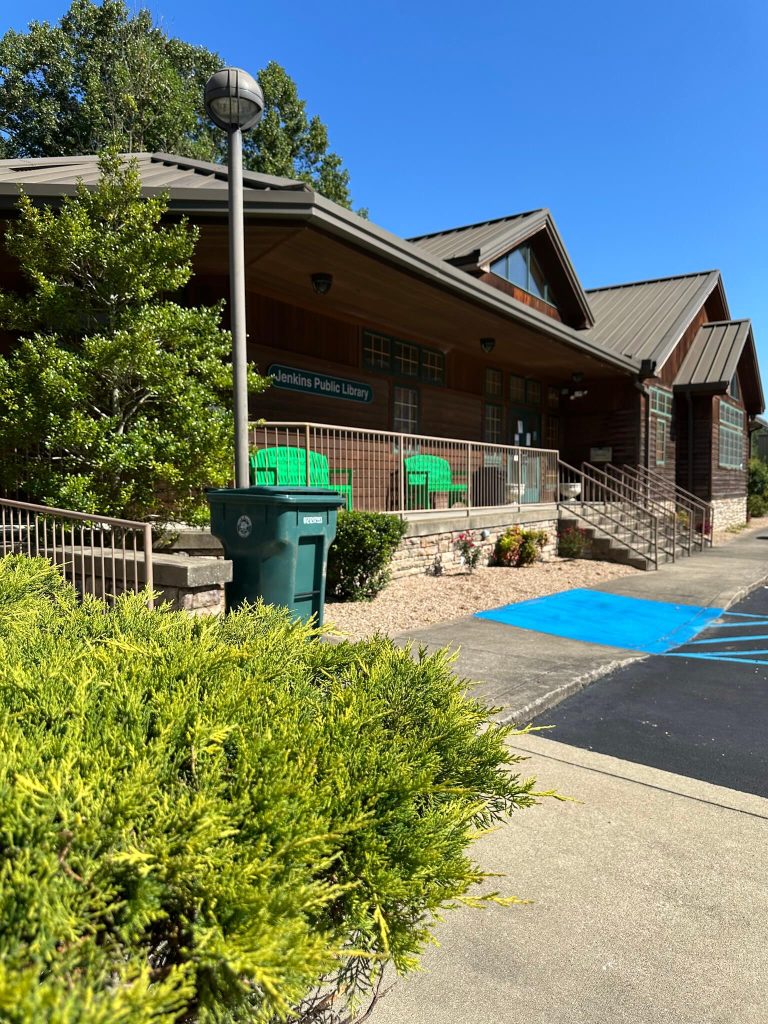
Today, one of the most enduring civic institutions in that former company town is the Mary Wolfe Memorial Jenkins Public Library, a branch of the Letcher County Public Library system on Highway 805. Its story runs from a women’s club project in borrowed basements, through years as the only public library in Letcher County and a national “best small library” award, to its current role as a community archive that scholars still visit when they write about coalfield education and civil rights.
What follows traces that history, with an emphasis on the primary accounts that survive in local histories, state planning documents, photographs, and community memory.
A coal company town that expected civic institutions
In autumn 1911 Consolidation Coal bought roughly 100,000 acres across Pike, Letcher, and Floyd Counties and laid out a new town that would bear the name of company director George C. Jenkins. Company planners did not just build mines and tracks. They erected sawmills and brickyards, a power plant, company stores, a YMCA style recreation building, churches, schools, and a brick office block that became the administrative center of the camp.
The Jenkins, Kentucky Photographic Collection at the University of Kentucky shows this new coal town in its first decades. Commissioned by Consolidation Coal between 1911 and 1930, its 204 images capture everything from dirt streets and neat rows of company houses to parades, schoolchildren, and civic buildings. Another image, “Schoolchildren in Jenkins, KY,” taken at the Burdine Colored School in 1921, underscores that education and public facilities in the camp were segregated and tightly controlled by the company.
Later reminiscences collected in The History of Jenkins, Kentucky describe how Consolidation Coal financed a model school system, a community church, and a company built “Y” complete with soda fountain, theater, and landscaped park. From the beginning, then, Jenkins was a place where the coal company expected to provide culture and recreation as well as wages. That paternalistic tradition would shape the town’s first public library.
“We want to keep Jenkins a model town”: The Women’s Civic Club and the first free library
The initiative for a library came not from the company hierarchy but from local women. The Women’s Civic Club of Jenkins organized in 1936, federated in 1937, and immediately began raising money and equipment for schools, the hospital, and other community projects.
In a 1955 feature story, the Louisville Courier-Journal profiled the club’s president, Miss Clara Shaw, who explained that the members wanted to “keep Jenkins a model town” and were willing to do the work and raise the money to do it. The article credited the club with establishing a “free public library” around 1945, first in the Methodist church basement where the group met, then in the town’s Boy Scout cottage. There was no heat in the cottage, and the books had to be moved again. Eventually the company offered part of its downtown office building to house the club’s library and meeting rooms.
By 1955, according to that same article, the club’s library occupied three large rooms in the former company office. The rooms held a kitchen, lodge space, and meeting hall as well as shelves of books. The club paid a librarian, Mrs Sam Holbrook, who kept regular weekday hours, and the shelves held roughly four thousand volumes purchased or donated through the women’s efforts. Annual August street carnivals, complete with booths, clowns, and home-baked goods, helped fund both the library and the club’s wider civic work.
Those descriptions, written at midcentury, preserve a near contemporary picture of a women’s organization turning company space into a community library and social hall long before there was county or state backing for rural library service.
“Almost eight hundred books”: Opening the Jenkins Public Library in 1951
The most detailed narrative of the library’s founding and growth comes from Mary Jo Wolfe, who worked at the library and later wrote “History of the Jenkins Public Library” for The History of Jenkins, Kentucky in 1973.
According to Wolfe, in 1946 the Women’s Civic Club appointed a committee for “community betterment.” Members Clara Shaw, Elsie Johnson, Grace Lyons, and Rose DeSimone studied the town’s needs and concluded that a public library would be the most effective way to promote education and culture in Jenkins. The full club adopted the public library as a formal project.
Club members and Girl Scouts canvassed the town for used books. New titles were bought with proceeds from bake sales, style shows, and other fundraisers. For a short time the volunteer run lending library operated one night a week, and fifty books went out on opening night. Then the building’s owner decided he no longer wanted the space used as a library. The collection was moved several times and finally locked away in storage. For almost five years the library project existed only as a dream and a few hundred boxed books.
In 1951 Samuel M. Cassidy of Consolidation Coal moved company offices into a new building, leaving space open in the older office block downtown. Two surviving members of the original library committee, Clara Shaw and Elsie Johnson, approached Mrs Cassidy, then Mr Cassidy himself, about using part of the old office for a permanent public library. Company officials agreed and even had the room renovated for library use.
When the stored books were finally unpacked, however, they turned out to be ruined by water damage. Once again the club had to rebuild its collection from scratch, soliciting more used books and buying what it could with the proceeds of bake sales, “tag days,” bridge parties, and community carnivals.
None of the club members had formal library training. With help from the Jenkins High School librarian and a librarian in Pikeville, they taught themselves how to select books, catalog and process them, and repair worn volumes.
At last, on April 1, 1951, the Jenkins Public Library opened in the renovated company office with almost eight hundred books on the shelves. Five club members staffed the desk as volunteers, and roughly one hundred people came through the door that first day. Wolfe notes with pride that the first book to be checked out was John Fox Jr.’s Trail of the Lonesome Pine, a mountain romance set not far from the coalfield world Jenkins served.
For the next three years, the club kept the doors open on a strictly volunteer basis, posting a monthly schedule that assigned members to work as librarian on particular days. When that arrangement proved too fragile, the Women’s Civic Club committed to paying a modest salary for a librarian, initially one dollar per day for two hours of work. Annual fund drives, street carnivals, letters to “library friends,” and door-to-door campaigns financed both the salary and ongoing acquisitions.
Wolfe emphasizes that in those early 1950s years the Jenkins Public Library was the only public library in Letcher County. In a coal town where the company had once controlled nearly every building and service, a civic women’s group had created something new: a free public library open to anyone in the community.
From local effort to state recognition
As the General Assembly began debating rural library aid in the 1950s, Jenkins’ club women lobbied hard. Wolfe describes them writing letters, making phone calls, and sending delegates to Frankfort to argue that coalfield towns deserved help building public libraries. Their efforts, combined with those of librarians across Kentucky, helped secure state aid that eased some of the financial strain on the Jenkins project.
By 1961 the Kentucky Library Extension Division had taken note of what the club had built. That year Jenkins was one of ten libraries commended by the governor for its observance of National Library Week, an honor that brought fifty new books and a large framed picture for the library.
Around the same time, state officials were planning a new regional library system that would include Letcher County with headquarters originally proposed for Pikeville. To qualify, the Jenkins Public Library had to become part of a county system. The Women’s Civic Club board, which also functioned as the local library board, voted to place Jenkins under the Letcher County Library and sent Clara Shaw to serve on the county board.
When Pikeville declined to participate, the initial regional plan collapsed. Yet the discussions laid groundwork for the next, more ambitious chapter in Jenkins’ library story.
“Best small library in the United States”
In late 1961, Margaret Willis, director of the Kentucky Library Extension Division, forwarded an entry form for the Book-of-the-Month Club’s Dorothy Canfield Fisher Library Contest to Clara Shaw. First prize carried five thousand dollars in books for the winning small library.
Shaw spent hours compiling statistics, history, and future plans for the Jenkins library and submitted the application that October. For weeks nothing happened. Then, on December 29, she received word that the Jenkins Public Library had been awarded first prize as the best small library in the United States.
Preparation for the award ceremony dominated the next three months. The library badly needed more space. Bethlehem Mines Corporation, successor to Consolidation Coal’s local operations, agreed to provide larger quarters in its new Beth-Elkhorn office building downtown. The new space offered more than three times the floor area of the old room. The company redecorated the premises, volunteers put fresh jackets on the old books, and schoolchildren helped carry the collection into its new home.
The Kentucky Library Extension Division arranged to purchase and catalog the books that would be bought with the Book-of-the-Month Club prize money, allowing the new titles to be on the shelves by the time of the award ceremony.
On April 8, 1962, seven representatives of the Book-of-the-Month Club, including chairman Harry Scherman, came to Jenkins as honored guests. A luncheon for roughly one hundred fifty “library friends” featured speakers such as author John Mason Brown, Lieutenant Governor Wilson Wyatt, and Margaret Willis of the state library agency. Scherman presented the five thousand dollar check to Clara Shaw, chair of the Jenkins Public Library board, followed by an open house at the new quarters. Among the dignitaries with local ties were Mr and Mrs Samuel Cassidy, Senator Thurston B. Morton, and writers Janice Holt Giles and Chloe Gifford.
The award did more than add books. It publicly recognized a coalfield community that had built a strong, well used public library on volunteer labor and small donations.
Regional systems, bookmobiles, and a county library tax
Shortly after the award, plans for a regional library system were revived. By late 1962 Jenkins had become headquarters for the Pine Mountain Regional Library, with Don Amburgey as regional librarian. Professional staff based in Jenkins now supported branch and bookmobile service across Letcher County and neighboring areas.
A bookmobile soon joined the system, bringing books to outlying communities, shut-ins, and older residents who could not easily travel into town. Wolfe notes that the bookmobile initially operated on a three day schedule, then expanded to five days a week as demand grew.
State aid, however, required a local match. The last major structural step for the library was securing a dedicated county library tax. Under Kentucky law that meant circulating a petition across Letcher County and gathering enough signatures for the fiscal court to consider a levy. Library supporters, many of them from Jenkins, spent long hours and many miles collecting names. The resulting tax amounted to a small portion of each tax bill but provided crucial, stable funding for library and bookmobile service.
By the early 1970s, Wolfe could report that the library was open fifty hours per week with a staff of four: circulation librarian Flora Mullins, assistant librarian Mary Jo Wolfe, maintenance custodian Hylma Haynes, and bookmobile librarian Claudia Anderson. The collection had grown to over 28,000 books plus newspapers, magazines, films, recordings, and a prized Kentucky collection and local history section.
State planning documents from the same era, including the Program for Library Development in Kentucky and later reports on expanding library services to disadvantaged adults, list Jenkins among the key public and regional libraries serving eastern Kentucky, confirming its role in statewide efforts to improve access to information.
From Beth-Elkhorn office to Mary Wolfe Memorial
The 1973 history leaves the story at a moment when Jenkins housed both a thriving branch library and the headquarters of a regional system. Later decades saw more changes in name, governance, and building.
By the end of the twentieth century, Jenkins Public Library was operating as one branch of the Letcher County Public Library District rather than as a regional headquarters. State directories and the Kentucky Department for Libraries and Archives identify Letcher County Public Library as a district library with branches, including Jenkins, under a countywide board.
In local memory, the Jenkins branch also acquired a new name. The Mountain Eagle’s “The Way We Were” column in December 2019 noted that on December 31 the Mary Jo Wolfe Memorial Library in Jenkins would move out of the building it had occupied since 1963, giving a specific date for the branch’s relocation out of its long-time downtown quarters.
Local Facebook posts by Jenkins and Letcher County residents show photographs of that older building and refer to it as the Mary Wolfe or Mary Jo Wolfe Memorial Jenkins Public Library. One commenter explains that after Mary Jo’s death “the library was renamed the Mary Jo Wolfe Memorial Library,” a detail that fits with other evidence about her life and work.
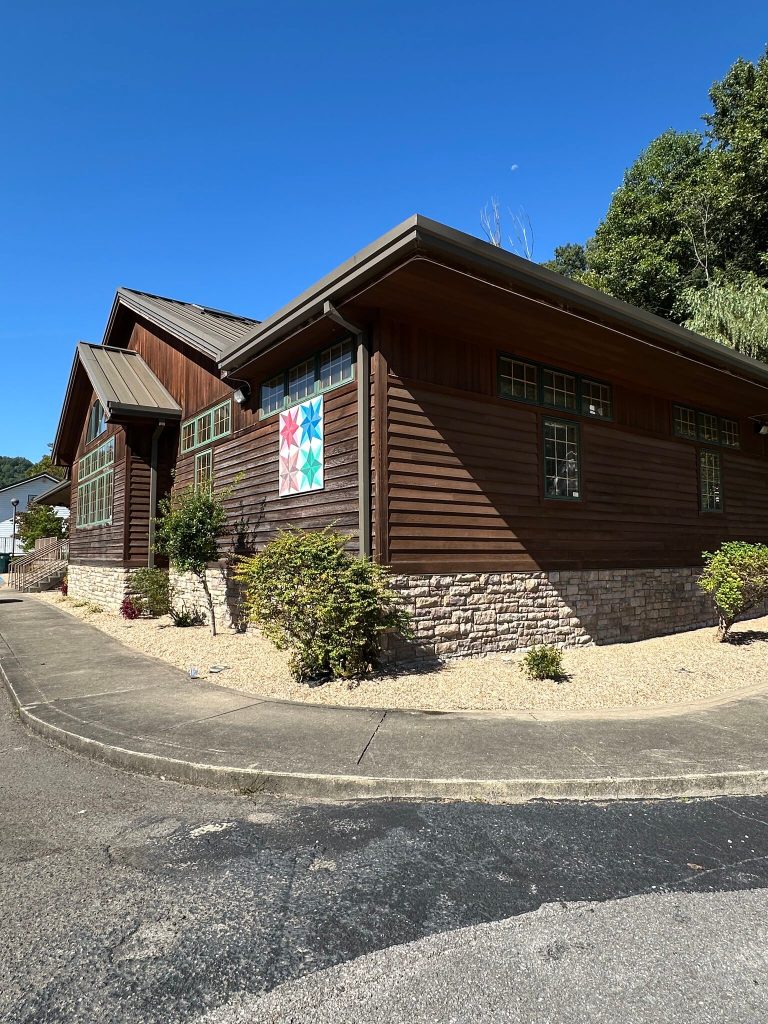
A 2022 slideshow from Kentucky Tennessee Living, devoted to the Jenkins library, uses interior and exterior photographs to walk viewers through what it calls the library’s “rocky and interesting history,” tying the present building to earlier locations that match the 1973 history and local newspaper accounts. Taken together, these near-contemporary visual and narrative sources show a branch that has moved multiple times as mining companies sold property, municipal priorities shifted, and new library facilities were built.
Today, state and local listings give the address of the Jenkins branch as 9543 Highway 805, P. O. Box 687, Jenkins, Kentucky 41537, and show it operating as one of several public branches serving Letcher County.
Who was Mary Jo Wolfe?
The 1973 “History of the Jenkins Public Library” is signed by Mary Jo Wolfe and identifies her as assistant librarian at that time. She wrote not as an outside observer but as part of the library’s staff, which gives her account particular weight as a near primary narrative of midcentury Jenkins.
Genealogical compilations for Letcher County, including obituary collections hosted by USGenWeb, record a Mary Wolfe of Jenkins as a member of Jenkins United Methodist Church and the Pine Mountain Chapter of the Order of the Eastern Star, noting that she served as assistant librarian for several years and as librarian of the Jenkins Public Library by the late 1980s.
Community members posting in Letcher County Facebook groups connect these biographical notes directly to the library’s later name. Several describe the Jenkins branch as being renamed the Mary Jo Wolfe Memorial Library after her death, preserving the memory of a librarian whose work bridged the era between the women’s club project and the modern county branch.
Putting the pieces together, primary evidence strongly suggests that the “Mary Wolfe” or “Mary Jo Wolfe” whose name now appears on branch signage was the same person who chronicled the library’s history in 1973, served as assistant librarian for many years, and eventually became librarian in her own right.
A small coalfield library in the archival landscape
The Jenkins library’s importance extends beyond town limits.
Recent scholarship on education, citizenship, and civil rights in the Appalachian coalfields by K. L. McCullum lists Jenkins Public Library among the archives and local history collections consulted, confirming that scholars travel to the branch to work with its holdings. A 2024 article in the Journal of Appalachian Studies on a historically Black school similarly acknowledges Jenkins Public Library as one of the institutions that made research possible.
The Archives in Appalachia 2020–21 Survey: Kentucky notes the Jenkins Public Library’s address and online presence and situates it alongside other small repositories preserving regional history. Genealogy guides for Letcher County point researchers toward the library for local obituary files, clipping collections, and family histories that sit alongside the Kentucky collection Mary Jo Wolfe described in 1973.
Even government reports far removed from library history, such as environmental impact statements and correctional siting studies, list the Jenkins Public Library as a place where citizens can review public documents. The branch functions not only as a place to borrow books, but also as a civic bulletin board and archive in a town whose early records are scattered across company files and community scrapbooks.
Coal company offices, clubwomen, and a memorial name
The Mary Wolfe Memorial Jenkins Public Library sits at the intersection of several Appalachian stories. It grew out of a coal company’s decision to build a model town with a dense civic landscape of schools, churches, and recreation halls, but it did not remain a top-down corporate amenity. Coal company space and occasional corporate support mattered, yet the library itself was the work of clubwomen who canvassed door to door for used books, learned cataloging on the fly, and lobbied state government for rural library aid.
National recognition in 1962, when the Jenkins Public Library was honored as the best small library in the United States, capped that first generation of work. The creation of regional and county systems, bookmobile service, and a dedicated library tax carried it into a second generation in which professional librarians and public funding supplemented ongoing community support.
The later decision to rename the branch for Mary Jo Wolfe linked the building itself to a particular librarian whose life spanned those transitions. Her 1973 history of the library, written from behind the desk she helped staff, remains the single most detailed account of how a coal camp town built and sustained a public library in the middle of the twentieth century.
Remembering the Mary Wolfe Memorial Jenkins Public Library today is not just a matter of honoring one person. It is a way to see how women’s clubs, coal companies, state agencies, and local readers cooperated and collided in the making of public culture in the Appalachian coalfields.
Sources and further reading
Mary Jo Wolfe, “H-1 History of the Jenkins Public Library,” in The History of Jenkins, Kentucky (Jenkins Area Jaycees, 1973), reprinted via Bill Thayer’s “Thayer’s Gazetteer.” Penelope
“The Women’s Civic Club,” Louisville Sunday Courier-Journal, 4 December 1955, reprinted in The History of Jenkins, Kentucky section F. Penelope
Jenkins, Kentucky Photographic Collection, 1911–1930, University of Kentucky Special Collections Research Center, and related images such as “Schoolchildren in Jenkins, KY (Burdine Colored School, 1921).” UK Libraries Guides+2UK Libraries Guides+2
Kentucky Department for Libraries and Archives, Program for Library Development in Kentucky and related planning documents listing the Pine Mountain Regional Library and Jenkins Public Library. ERIC+1
Letcher County Public Library and Letcher County Government web pages, and the Kentucky public library directory entries that identify Jenkins Public Library as a branch of the Letcher County system. Lib Journals+3Kentucky Libraries and Archives+3Kytn Living+3
The Mountain Eagle (Whitesburg, Kentucky), “The Way We Were” column, December 2019, noting the Mary Jo Wolfe Memorial Library’s move from its 1963 building, and earlier columns referencing the Jenkins Public Library. The Mountain Eagle+1
USGenWeb Letcher County obituary compilations for Mary Wolfe, noting her service as assistant and later head librarian at Jenkins Public Library. RootsWeb
The History of Jenkins, Kentucky, Jenkins Area Jaycees, especially section F on the Women’s Civic Club and section H on local institutions. Penelope+1
Kentucky Tennessee Living, “The First Library in Jenkins” and “Jenkins Library 2022 Slideshow,” which synthesize local history and show recent photographs of the Mary Wolfe Memorial Jenkins Public Library. CityLibrary
“Jenkins, Kentucky” entry on ExploreKYHistory and the Jenkins historical marker, summarizing the town as a planned coal community created by Consolidation Coal Company. Explore Kentucky History+1
“Jenkins, Kentucky – a visual history,” History in Photos blog, which introduces the Jenkins Photographic Collection as a record of daily life in a coal company town. Penelope
K. L. McCullum, “They Will Liberate Themselves: Education, Citizenship, and Civil Rights in the Appalachian Coalfields,” History of Education Quarterly 61 (2021), which lists Jenkins Public Library among research sites. Cambridge University Press & Assessment
“You Will Always Be…,” Journal of Appalachian Studies (2024), on a historically Black school, acknowledging Jenkins Public Library for access to local history sources. Scholarly Publishing Collective
“Archives in Appalachia 2020–21 Survey: Kentucky,” Appalachian Curator survey of archival repositories, including Jenkins Public Library. Lib Journals