
Repurposed Appalachia Series – High Knob Lookout Tower of Wise & Scott Counties
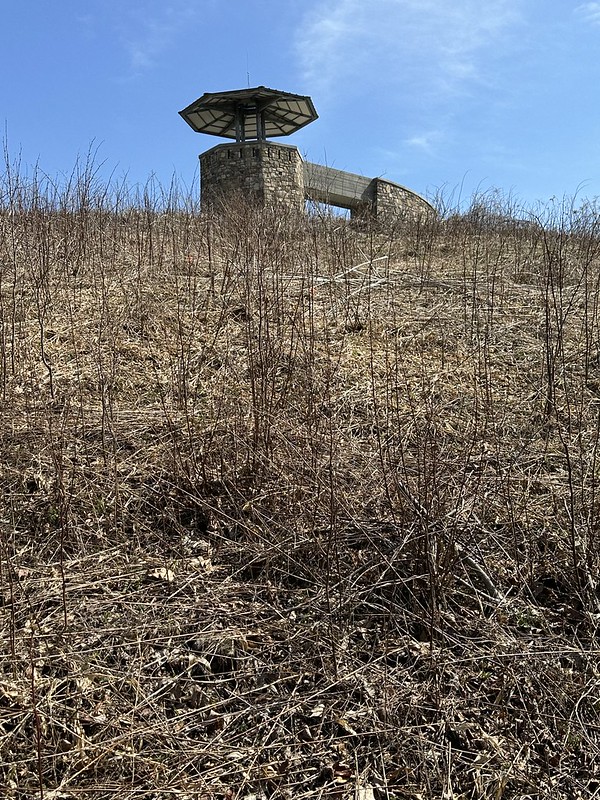
High on the spine of Stone Mountain, above the lights of Norton and the deep green of Powell Valley, a stone tower looks out over five states. On a clear day visitors on the High Knob Observation Tower can trace ridgelines into Kentucky, Tennessee, West Virginia, and North Carolina while standing on the highest point in Wise County, Virginia.
Today the tower feels like a scenic pull off and a family walk. For most of its life, though, High Knob was a working summit. It was a fire lookout, a Civilian Conservation Corps project, a Job Corps construction site, a beloved courting spot for local couples, and finally a crime scene when arsonists burned the tower on Halloween night in 2007.
The story of the High Knob tower is really the story of how one mountain shifted from fire control and extractive industry toward conservation, recreation, and ecotourism.
A summit on the Cumberland rim
The federal Geographic Names Information System lists High Knob as a summit in Wise County, Virginia, standing on the high point of Stone Mountain at roughly 4,223 feet above sea level. The mountain straddles the border of Wise and Scott counties and forms part of the western front of the Appalachian Mountains, where the Cumberland Plateau tilts into the Ridge and Valley country.
From the tower’s rail the geography is easy to see. To the west the plateau falls away toward the coal towns of Wise County. To the east and south, the folded valleys of Scott County and the Clinch River country run toward Natural Tunnel and the Blue Ridge. The U.S. Forest Service places both the High Knob Observation Tower and the nearby High Knob Recreation Area within the Clinch Ranger District of the George Washington and Jefferson National Forests, a block of public land that covers tens of thousands of acres around the summit.
Historic and modern USGS topographic maps for the Norton quadrangle show why the summit mattered. By the mid twentieth century the maps mark a lookout tower symbol on the ridge and label “High Knob Recreation Area” just downhill near a small artificial lake. Those same maps place Norton, Big Stone Gap, and the coal camps of Wise County almost directly beneath the tower’s line of sight, illustrating how a fire watcher here could scan a vast crescent of timber and mine lands.
CCC days – cabin, campground, and a first lookout
The modern recreation complex at High Knob traces back to New Deal work in the late 1930s. Forest Service and tourism accounts agree that the High Knob Recreation Area was built during that era by Civilian Conservation Corps crews, who also developed similar sites across the Clinch Ranger District.
Scott County tourism materials note that the first structure at the summit was a small log cabin in the 1930s, and that over time additional buildings joined it on the crest. At almost the same moment, according to the High Knob article in the National Historic Lookout Registry and the High Knob entry on Wikipedia, the Forest Service erected a 14 by 14 foot wooden lookout house on the summit. It went up around 1938 and 1939 and quickly became part of a regional fire detection network across the Cumberland Mountains.
Just below the crest, New Deal crews carved out a small four acre lake, campsites, and a bathhouse that still serve visitors today. The High Knob Recreation Area is now recognized as the highest developed campground in the region, with fourteen tent and small RV sites clustered around the lake and trailheads for longer routes such as the Chief Benge Scout Trail.
These CCC era improvements gave the mountain a dual identity. High Knob was a working ridge where lookouts scanned for smoke, but it was also a public playground for picnics, fishing, and family campouts at a time when much of southwest Virginia recreation space lay in privately owned coal lands.
Job Corps carpenters and a three story tower
By the 1970s the original wooden lookout had reached the end of its service life. Regional tourism and county level summaries report that a new, much larger tower was built in the late 1970s by enrollees from the Flatwoods Job Corps Center. It was dedicated in 1978.
Photographs and travel writeups from that period show a stout stone base topped with a three story wooden superstructure, ringed by wraparound decks that gave visitors the feeling of standing on top of the Cumberland rim. The National Historic Lookout Registry listed the High Knob tower as one of the significant remaining Appalachian fire lookouts, underscoring its place in the national story of forest protection.
By the late twentieth century, fire detection had largely shifted to aircraft, satellite data, and ground crews, but the tower remained a powerful local landmark. Residents interviewed for regional features recalled proposals on the decks, Sunday drives up the mountain, and school field trips where students counted the ridges out to the Smokies.
Halloween fire on the summit, 2007
That sense of permanence shattered in the early hours of October 31, 2007. Federal and local news coverage reported that fire broke out in the wooden superstructure before dawn. By the time Forest Service staff and local fire departments could reach the summit, the three story tower was engulfed. Firefighters were able to keep the blaze from running into the surrounding forest, which was already stressed by drought, but the tower itself was lost.
For weeks, the stone base sat blackened and empty. The loss was personal. Wise County coverage and later tourism features describe the tower as one of the last working Appalachian fire lookouts and a symbol of the mountain region as a whole.
Investigators eventually focused on two volunteer firefighters. In January 2009 Associated Press reports carried by Richmond station WWBT stated that Nicholas Owens of Coeburn pleaded guilty in federal court to setting fire to the High Knob Observation Tower and a restroom building at Hanging Rock Recreation Area in nearby Scott County on October 31, 2007. He also admitted lying to investigators. A co defendant, Christopher Hyatt, had already entered a guilty plea. Those AP accounts function as key primary sources on the criminal case.
The destruction of the tower also appears in contemporary local papers such as the Kingsport Times News and The Coalfield Progress, which described the Halloween blaze as the loss of a beloved landmark and documented visits to the ruined base.
From ashes to organizing – the High Knob Enhancement Corporation
If the fire marked the end of one era for High Knob, it also sparked a new one. In the months after the arson, local residents, conservation groups, tourism advocates, and public officials began meeting around a shared question: whether the tower could or should be rebuilt.
An article in The Appalachian Voice, “Ecotourism Rises Along with Hope for a Region’s Future,” traces that organizing. It describes how a coalition that included environmental advocates, coal and utility interests, local governments, and federal partners took shape to rebuild the tower and link it to broader economic transition. Many of those participants later came together as the High Knob Enhancement Corporation, a nonprofit created in 2008 to raise money and coordinate planning for the summit.
Public records confirm that HKEC registered as a 501(c)(3) organization and began working with partners such as Friends of Southwest Virginia and the Southwest Virginia Cultural Heritage Foundation, which helped channel state cultural and outdoor recreation funding toward projects identified in the emerging High Knob master plan.
Fundraising happened at every scale. Appalachian Voices and regional news accounts recall schoolchildren donating change, local businesses sponsoring benefits, and major grants flowing in from federal and state programs. A 2011 report from the Holston Valley Broadcasting Group noted a fifty thousand dollar Appalachian Regional Commission grant announced by U.S. Senator Jim Webb to support the High Knob Observation Tower project, part of a larger package of public and private donations that eventually topped half a million dollars.
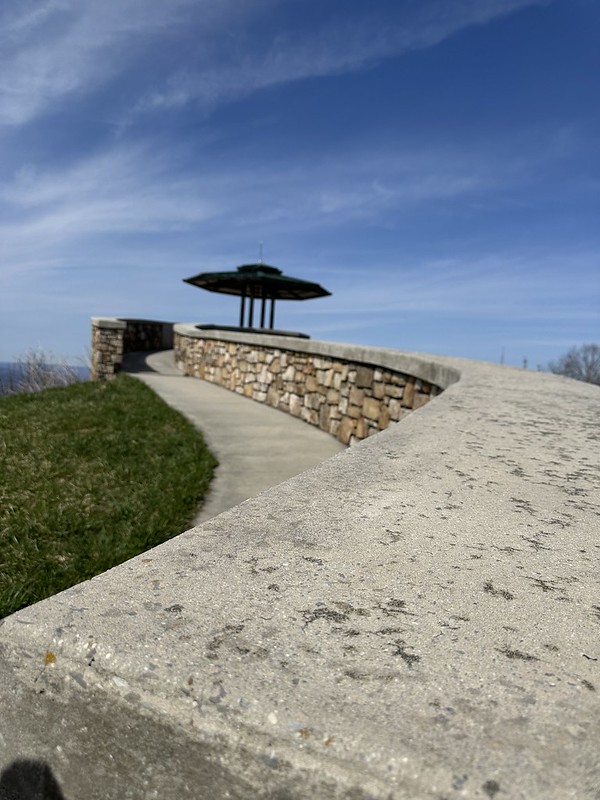
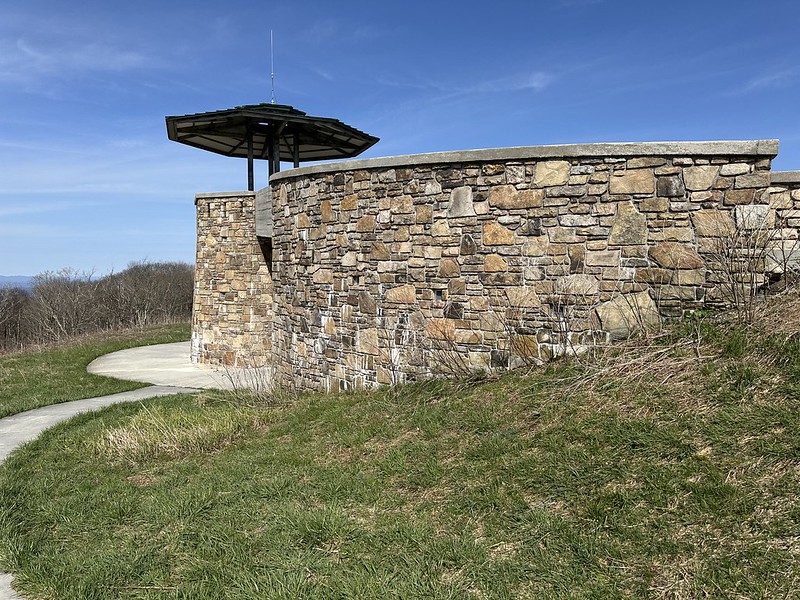
Under Forest Service direction, architects and engineers developed a design that would honor the historic role of the tower but eliminate its vulnerabilities. The resulting plans called for a stout stone and concrete base, a steel roof structure, and a gently graded accessible walkway instead of steep wooden stairs. Wikipedia’s High Knob entry credits Hill Studio with producing the design and DOT Construction with building the new tower for the Forest Service.
A new fire proof tower opens in 2014
Construction progressed in the early 2010s. By the summer of 2014 regional TV coverage and hiking blogs were reporting that a new High Knob Observation Tower was rising on the old base. News pieces noted its concrete, rock, and steel construction and described the project as a shared achievement of hundreds of individuals and organizations.
The replacement tower officially opened on August 22, 2014, with a ribbon cutting that drew crowds from Norton, Wise, Scott County, and beyond. Appalachian Voices reported that the project cost roughly six hundred thousand dollars and that donors included everyone from local schoolchildren to regional nonprofits and federal agencies.
Tourism agencies quickly adopted the rebuilt tower as a regional symbol. Visit Wise County, Virginia, describes the structure as a “brand new observation tower with a long history,” sitting at 4,223 feet and offering views into five states. The Virginia Association of Counties framed the tower as a phoenix like emblem of hope and resilience in a 2021 feature encouraging readers to visit Wise County and the High Knob Tower. Scott County tourism promotions likewise highlight the tower as the best known feature of the High Knob Recreation Area and trace the sequence of structures that have stood on the summit since the 1930s.
The Forest Service itself emphasizes that the tower has accessibility features uncommon at older lookout sites. The current tower is reached by a paved path and ramp system designed to meet accessibility standards, allowing visitors using wheelchairs or strollers to reach the viewing platform.
High Knob today – trailhead, classroom, and symbol
In the years since the ribbon cutting, High Knob has shifted fully into its new role as a recreation hub and outdoor classroom. The City of Norton’s “High Knob Region Landmarks” guide lists the tower alongside Flag Rock Recreation Area, Powell Valley Overlook, and High Knob Recreation Area as key destinations in a larger mountain playground.
The summit also serves as a trailhead. The Chief Benge Scout Trail, a long backcountry route, begins at the tower and threads more than fifteen miles through the national forest toward Little Stony Creek and Hanging Rock. Other local efforts have linked Norton’s Flag Rock mountain bike system and city reservoirs to High Knob through a network of shared use trails, an initiative documented in the High Knob Adventure Guide and in city planning materials for the High Knob master plan.
For conservation advocates and educators, High Knob has become a natural laboratory. Appalachian Voices and regional environmental groups point to the summit’s unusual geology and biodiversity, including rare species such as the green salamander, as reasons to promote low impact recreation and interpretation rather than resource extraction. The annual High Knob Naturalist Rally, organized by local partners including the Clinch Coalition, uses the tower as a base for guided hikes and citizen science.
At the same time, county level economic development plans and tourism campaigns treat the tower as an anchor for a more diverse, tourism based economy in a region long dominated by coal. City of Norton materials about getting “outside in Norton” explicitly link the High Knob master plan to goals of redefining the local economy while improving quality of life for residents.
Why the High Knob tower matters
Seen from the overlook, the High Knob tower can look like a simple structure: stone and concrete, galvanized steel and a roofline against the sky. The historical record shows something more complex.
Archival Forest Service records and CCC era surveys place the summit within the larger story of New Deal conservation and the expansion of national forests in the southern Appalachians. The National Historic Lookout Registry and mid century topographic maps document how fire towers once studded these ridges, wired together through radio and telephone to protect timberlands that powered mines, mills, and railroads.
Newspaper articles, court records, and advocacy pieces from 2007 through 2014 capture a community reeling from the loss of a landmark and then slowly deciding to rebuild it as something more than a fire tower. Tourism brochures and city planning documents from the last decade show the summit recast as an economic development engine, a trail hub, and a teaching tool about biodiversity and heritage.
For visitors standing at the rail, those layers are not always obvious. They see ridges and far off states, not CCC pay stubs or ARC grant documents. For historians of the Appalachian region, though, the High Knob Lookout Tower offers a clear vantage point on a larger shift across the mountains: from a landscape managed for fire suppression and extraction to one where communities are trying to balance conservation, recreation, and a new kind of mountain economy.
Sources & Further Reading
United States Forest Service. “High Knob Tower.” George Washington and Jefferson National Forests (Clinch Ranger District). Accessed December 26, 2025. https://www.fs.usda.gov/detail/gwj/specialplaces/?cid=stelprdb5302337
United States Forest Service. “High Knob Recreation Area.” George Washington and Jefferson National Forests.Accessed December 26, 2025. https://www.fs.usda.gov/recarea/gwj/recreation/camping-cabins/recarea/?recid=73945
United States Forest Service. “High Knob Viewshed and Habitat Improvement Project.” Project no. 58124, George Washington and Jefferson National Forests. Accessed December 26, 2025. https://www.fs.usda.gov/project/?project=58124
United States Forest Service. “Chief Benge Scout Trail (Forest Trail #401).” George Washington and Jefferson National Forests. Accessed December 26, 2025. https://www.fs.usda.gov/recarea/gwj/recreation/hiking/recarea/?recid=73947
“Outdoor Science and Learning – High Knob Tower.” Outdoor Science and Learning. Accessed December 26, 2025. https://sites.google.com/site/outdoorsciencelearning/home/high-knob-tower-lesson-plans
U.S. Geological Survey. “High Knob.” Geographic Names Information System (GNIS), Feature ID 1496619. Accessed December 26, 2025. https://edits.nationalmap.gov/apps/gaz-domestic/public/gaz-record/1496619
U.S. Geological Survey. Norton, Virginia 7.5-Minute Topographic Quadrangle. 1:24,000. Reston, VA: U.S. Geological Survey, 1957. PDF via Historical Topographic Map Collection. Accessed December 26, 2025. https://prd-tnm.s3.amazonaws.com/StagedProducts/Maps/HistoricalTopo/PDF/VA/VA_Norton_186161_1957_24000_geo.pdf
TopoQuest. “USGS Quad: Norton, VA.” TopoQuest Topographic Map Viewer. Accessed December 26, 2025. https://www.topoquest.com/map.php?lat=36.89&lon=-82.63&datum=nad83&zoom=4&map=auto&coord=d&mode=pan&size=m
High Knob Regional Initiative. High Knob Adventure Guide. PDF brochure, c. 2019. Accessed December 26, 2025. https://static1.squarespace.com/static/5d2cb3c9c193e700013ce4f3/t/5d4a36a94c4f7a0001f1c151/1565129394497/High+Knob+Adventure+Guide.pdf
Hill Studio et al. High Knob Master Plan 3.0. Prepared for High Knob Enhancement Corporation and partners, 2019. Accessed December 26, 2025. https://static1.squarespace.com/static/5d2cb3c9c193e700013ce4f3/t/5dd6d21512bf0d226eafcf58/1574346521725/High%2BKnob%2BMaster%2BPlan%2B3.0_Reduced.pdf
Virginia General Assembly. Southwest Virginia Cultural Heritage Foundation and “Friends of Southwest Virginia” Expenditure and Revenue Report, Fiscal Year 2024. Richmond: Commonwealth of Virginia, 2024. Accessed December 26, 2025. https://rga.lis.virginia.gov/Published/2024/RD441
Candid. “High Knob Enhancement Corporation.” GuideStar Nonprofit Profile. Accessed December 26, 2025. https://www.guidestar.org/profile/27-0070413
Kentucky Public Service Commission. Application of Kentucky Utilities Company for an Adjustment of Its Electric Rates,case documents listing High Knob Enhancement Corporation among community sponsorships. Frankfort, KY: Kentucky PSC, 2010s. Accessed December 26, 2025. https://psc.ky.gov
Virginia Organizing. “The Clinch Coalition.” Virginia Organizing – Featured Community Partner, December 10, 2010. Accessed December 26, 2025. https://virginia-organizing.org/the-clinch-coalition/
Associated Press. “Community Rebuilds Va. Tower Destroyed by Fire.” WTOP News, August 25, 2014. https://wtop.com/news/2014/08/community-rebuilds-va-tower-destroyed-by-fire/
Associated Press. “Ex-Firefighter Pleads Guilty to Lookout Tower Fire.” WWBT 12 On Your Side, January 21, 2009. https://www.nbc12.com/story/9690260/ex-firefighter-pleads-guilty-to-lookout-tower-fire/
WCYB-TV. “The Return of High Knob’s Tower.” WCYB News 5, July 29, 2014. https://wcyb.com/news/local/the-return-of-high-knobs-tower-11-21-2015
Kingsport Times News. “Arsonists Destroy High Knob Tower.” Kingsport Times News, October 31, 2007. Accessed via archive December 26, 2025. https://www.timesnews.net
“High Knob.” Wikipedia. Last modified December 21, 2025. Accessed December 26, 2025. https://en.wikipedia.org/wiki/High_Knob
“High Knob Facts for Kids.” Kiddle Encyclopedia. Last modified October 17, 2025. Accessed December 26, 2025. https://kids.kiddle.co/High_Knob
Appalachian Voices. “Ecotourism Rises Along with Hope for a Region’s Future.” The Appalachian Voice, October 14, 2014. https://appvoices.org/2014/10/14/from-the-ashes-ecotourism-rises/
High Lonesome Trails. “Viewing the Cumberlands at High Knob Tower.” High Lonesome Trails, January 5, 2016. https://highlonesometrails.wordpress.com/2016/01/05/viewing-the-cumberlands-at-high-knob-tower/
Koetz, Quincy. “Hiking High Knob, Virginia.” QuincyKoetz.com, September 2014. https://quincykoetz.com/2014/09/hiking-high-knob-virginia/
Browning, Wayne. “High Knob Landform.” HighKnobLandform.com. Accessed December 26, 2025. http://www.highknoblandform.com
Peakbagger.com. “Fire & Lookout Towers of Virginia.” Peakbagger Peak List. Created 2011, updated through 2025. Accessed December 26, 2025. https://www.peakbagger.com/list.aspx?cid=21241
Ky/TN Living. “High Knob Observatory, Norton, Virginia.” Ky/TN Living, 2020. Accessed December 26, 2025. https://kytnliving.com/high-knob-observatory-norton-virginia/
Blue Ridge Outdoors Magazine. “Hike the Southeast: Chief Benge Scout Trail.” Blue Ridge Outdoors, February 2015. https://www.blueridgeoutdoors.com/magazine/february-2015/hike-the-southeast-chief-benge-scout-trail/
Visit Wise County, Virginia. “High Knob Observation Tower.” VisitWiseCounty.com – Hiking. Accessed December 26, 2025. https://visitwisecounty.com/places/high-knob-observation-tower/
Visit Southwest Virginia. “High Knob Observation Tower.” VisitSWVA.org – Mountains, Outdoors and Sports. Accessed December 26, 2025. https://visitswva.org/attractions_amenity/mountains-outdoors-and-sports/page/3/
Explore Scott County, Virginia. “High Knob Recreation.” ExploreScottCountyVA.org – Things to Do. Accessed December 26, 2025. https://www.explorescottcountyva.org/things-to-do/high-knob-recreation/
Explore Scott County, Virginia. “Camping – High Knob Recreation Area.” ExploreScottCountyVA.org – Camping.Accessed December 26, 2025. https://www.explorescottcountyva.org/things-to-do/camping/
City of Norton. “Outdoor Destinations: High Knob Observation Tower.” NortonOutside.com. Accessed December 26, 2025. https://nortonoutside.com/outdoor-destinations/
University of Virginia’s College at Wise. “What to Do in Wise.” UVA Wise – Visit Wise. Accessed December 26, 2025. https://www.uvawise.edu/about/visit-wise/what-do-wise
Virginia Tourism Corporation. “High Knob Recreation Area / High Knob Lookout Tower.” Virginia.org – Outdoors and Sports Listings. Accessed December 26, 2025. https://www.virginia.org/Listings/OutdoorsAndSports/HighKnobRecreationArea/
Town and Country Realty of Southwest Virginia. “High Knob.” In “Area Info.” Town & Country Realty of Southwest Virginia. Accessed December 26, 2025. https://www.townandcountryrealty.org/area-info
Virginia Association of Counties. “Visit Wise County and the High Knob Tower.” County Connections (VACo blog),2021. Accessed December 26, 2025. https://www.vaco.org
Author’s Note: High Knob Tower has been one of my favorite summits to research, and it is an even better place to stand in person with the wind in your face and five states on the horizon. If you find yourself anywhere near Norton or Wise County, build in the extra time to drive up and walk out to the tower. It is a quick detour that feels like stepping onto the roof of Appalachia.