
Repurposed Appalachia Series – Jenkins Depot, Now the David A. Zegeer Coal-Railroad Museum
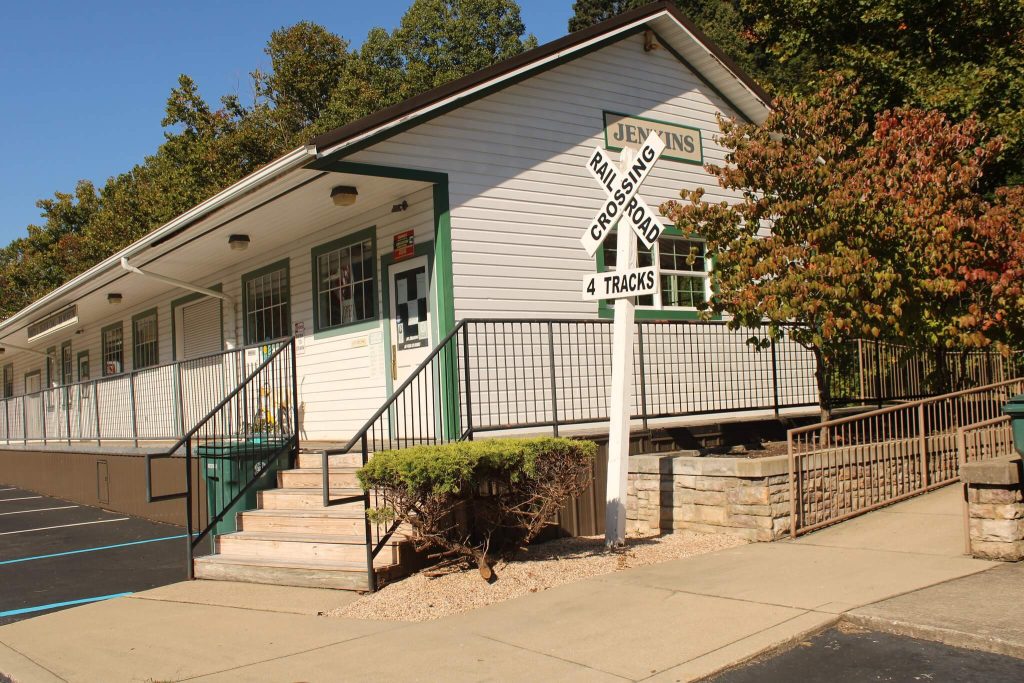
On a fall day in 1912 a photographer working for Pittsburgh Consolidation Coal Company set up a glass plate camera beside a brand new frame building in a brand new coal town. The caption on the negative reads simply “Jenkins Depot.”
Coal camps were rising along Elkhorn Creek and Shelby Creek. Track gangs had just finished pushing the Sandy Valley and Elkhorn Railroad up from the Big Sandy River to a place Consolidation proudly advertised as “Consolidation City.” The little yellow and white station at Jenkins would be the town’s front door to the outside world. For generations miners and their families arrived, departed, shipped freight, and collected pay around that platform.
Today the same depot survives as the David A. Zegeer Coal-Railroad Museum. The order boards are gone and the tracks see no passenger service, yet the building still tells the story of how coal and railroads built Jenkins and how a company structure became a community landmark.
Building a Railroad Town
Jenkins did not grow slowly up a valley road. It arrived almost at once. In 1911 Consolidation Coal bought thousands of acres in Letcher County and set out to create a model coal town. To move steel, timber, machinery, and people into the mountains the company backed the Sandy Valley and Elkhorn Railway, a line that climbed from Shelby Junction on the Big Sandy to brand new mines at Jenkins.
The community history volume The History of Jenkins, Kentucky recalls that the railroad reached town through Shelby Gap just as Consol’s first mines were ready. Track and mine construction proceeded together. The authors describe Jenkins plainly as a town located “on the Sandy Valley and Elkhorn Railroad,” built so coal could flow out and supplies could flow in.
Early corporate photographs in the Pittsburgh Consolidation Coal Company archive show rough lumber trestles, tipples, and bunkhouses going up along a valley floor that had only recently been cleared. Among those images are multiple views labeled “Jenkins Depot” and “Sandy Valley and Elkhorn Railroad Station, Jenkins, Kentucky” dated autumn 1912.
The station sat near the center of town. Later recollections by Jenkins school alumni remember being walked “down to Jenkins depot” to board the train, describing the passenger station as a “little yellow and white” building near a carpenter shop rather than the larger freight depot that survives today.
In those years the depot represented more than a place to catch a train. For new arrivals it marked the moment a remote job offer turned into a lived reality. Passengers stepped off onto a platform framed by tipples, company offices, boarding houses, and the hospital that Kentucky Historical Society photographs place in the same corporate image series as the depot views.
A Coal Company Window To The Outside
Because Consolidation owned both the mines and the railroad, the depot functioned as a kind of company gatehouse. The Sandy Valley and Elkhorn handled coal, of course, but also mail, express shipments, company supplies, and the regular flow of visitors that a showpiece coal town attracted.
One of the most striking surviving images is a photograph of a train dubbed the “Bankers Special” posed at Jenkins. It appeared in the Baltimore and Ohio Employees Magazine with a caption noting that the special carried coal company officials and bankers back to Baltimore. In the cab stood engineer H. L. Burpo of Jenkins, whose later career running the line’s first and last passenger trains has become part of local lore.
Legal records confirm how busy and consequential the railroad’s operations became. Cases such as Sandy Valley and Elkhorn Railway Co. v. Hughes and Sandy Valley and Elkhorn Railway Co. v. Bentley, argued before the Kentucky Court of Appeals in the 1910s, deal with property disputes and liabilities along the line. They hint at the tensions that came when a corporate railroad cut through small farms and hollows on its way to the new town.
By mid century timetables for the Chesapeake and Ohio Railway’s Ashland Division listed Jenkins as a station on the Sandy Valley and Elkhorn Subdivision. Trains connected the Letcher County camp to the wider C and O system and thus to Cincinnati, the coal piers at Newport News, and destinations far beyond.
What The Maps Reveal
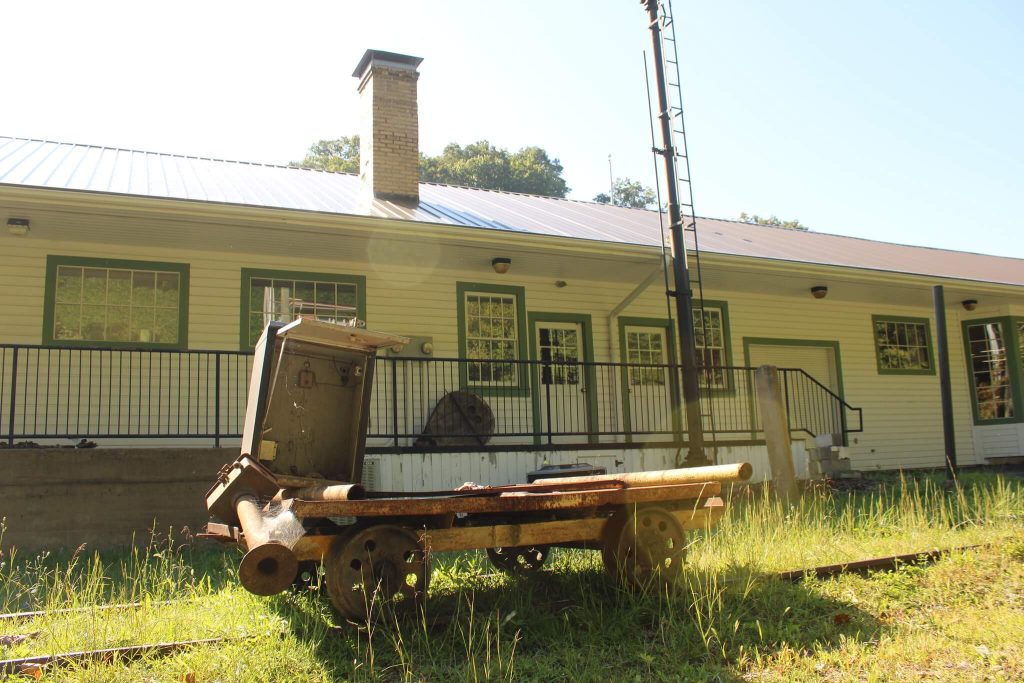
The depot also appears in the paper trail of federal and state surveys that tried to capture the American rail network on blueprints and insurance sheets.
When the Interstate Commerce Commission undertook a national valuation of railroads in the 1910s and 1920s it produced detailed maps of the Sandy Valley and Elkhorn main line from Shelby Junction to “Consolidation Mine No. 208, near Jenkins.” The valuation volumes and catalog entries note multiple maps, including a mosaic, which show the track layout and sidings at Jenkins in the years when the depot was new.
Sanborn Fire Insurance maps for Jenkins, cited in later environmental impact studies, add another layer. These detailed town plans marked building materials, uses, and hazards. Researchers who have consulted the Jenkins sheets describe how the depot sat at the edge of a compact business district of stores, hotel, and company offices, with tracks and tipples just yards away.
United States Census enumeration district maps for Letcher County from 1950 show the town grid, the rail line, and the depot footprint during the postwar peak of coal tonnage. By then automobiles and buses had begun to compete with the railroad, yet the station still anchored the lower end of Main Street.
A Standard Plan C and O Depot
Architecturally the Jenkins depot belonged to a family of Chesapeake and Ohio buildings that once lined the railroad across Kentucky. A National Register of Historic Places study titled “Historic Railroad Depots of Kentucky,” prepared for the Kentucky Heritage Council, compares the station to the C and O depot at Vanceburg and notes that the same form and materials appeared at Allen and Jenkins.
The typical C and O small-town depot of this period was a long, low, wood-frame structure with a broad eave that sheltered passengers and freight from rain. It usually combined waiting room, ticket office, and freight section under one roof. Photos of the Jenkins building taken in later years show that configuration clearly: wide freight doors, smaller passenger entrance, bay window for the agent to watch the track, and a signboard with “JENKINS” in block letters along the eave.
A Kentucky Transportation Cabinet inventory of abandoned railroad corridors lists the old C and O branch that once served the town, noting that the line remains largely intact and specifically mentioning “museum in restored depot at Jenkins.” In the eyes of transportation planners the building had already shifted categories from active railroad facility to heritage site.
From Company Asset To Community Museum
By the late twentieth century coal production in Letcher County had declined and the Sandy Valley and Elkhorn branch no longer handled the volume it once did. The Kentucky Abandoned Railroad Corridor Inventory notes that the old C and O line serving Jenkins is now cut back and sees limited traffic. Yet instead of losing its station entirely, the town chose to reinvent it.
In the 1990s local leaders and volunteers restored the depot and opened the David A. Zegeer Coal-Railroad Museum. Named for a longtime Consolidation Coal engineer who later became a federal official in mine safety, the museum occupies what one description calls an “authentically restored 1911 train station” at 102 Main Street.
Inside visitors find mine lamps, carbide lights, tools, maps, photographs, and binders of camp and railroad images that span a century of Jenkins history. A 2012 Mountain Eagle article celebrating the museum’s anniversary highlighted how the exhibits trace the boom years of company-town life, the arrival of electricity, the role of African American miners, and the gradual decline of deep mining.
Reviewers who have toured the museum remark on the power of seeing miners’ faces in old photographs and hearing guides who grew up in Jenkins explain what life in the camp was like. For many the experience of standing inside the old station, looking out across the tracks and toward the former high school, turns abstract history into something concrete.
Why The Jenkins Depot Matters
The story of the Jenkins depot touches several wider Appalachian themes.
First, it illustrates how railroads underwrote the rise of company towns. Without the Sandy Valley and Elkhorn line Consolidation could not have built Jenkins at the scale and speed that it did. The depot represented the promise of modernity, connecting a remote valley to global coal markets and to distant cities that bought the town’s black rock.
Second, the depot’s changing role shows how communities adapt as industries falter. When passenger service ended and freight dwindled, the building could easily have been razed. Instead residents and former miners transformed it into a museum and civic space. What began as a corporate asset now belongs to the town, both legally and in memory.
Finally, the depot embodies the importance of archives, maps, and photographs in reconstructing everyday Appalachian history. A researcher who pieces together glass plate negatives at the Smithsonian, Sanborn maps, Kentucky Heritage Council surveys, and local memoirs can trace not just the outline of a building but the lives that passed through its doors.
On the surface the Jenkins depot is simply a long white building beside a quiet track. Look closer, through the lens of primary sources and community memory, and it becomes a portal. Coal company officials and bankers, immigrant laborers, Black miners recruited from the Deep South, union organizers, GIs heading to war, and today’s tourists have all walked its platform. The trains no longer run, yet the station continues to send something important down the line: a reminder that even small Appalachian towns deserve to see their histories preserved and told.
Sources & Further Reading
Pittsburgh Consolidation Coal Company. Pittsburgh Consolidation Coal Company Photographs and Other Materials, NMAH.AC.1007. Archives Center, National Museum of American History, Smithsonian Institution. https://sirismm.si.edu/EADpdfs/NMAH.AC.1007.pdf sirismm.si.edu
University of Kentucky Special Collections Research Center. “Jenkins, Kentucky Photographic Collection, 1911–1930.” ArchiveGrid collection record. https://researchworks.oclc.org/archivegrid/collection/data/225865203 OCLC+1
Kentucky Historical Society. “Consolidation Coal Company, Jenkins, Kentucky.” Graphic 22 photograph collection. https://www.kyhistory.com/digital/collection/PH/id/8140 kyhistory.com+2kyhistory.com+2
Jenkins Area Jaycees. The History of Jenkins, Kentucky: Compiled in Honor of the Sixtieth Anniversary Homecoming Celebration, 1912–1973. Jenkins, KY: Jenkins Area Jaycees, 1973. Digital text, Penelope Project, University of Chicago. https://penelope.uchicago.edu/Thayer/E/Gazetteer/Places/America/United_States/Kentucky/Letcher/Jenkins/_Texts/HJK/home.html AbeBooks UK+3Penelope+3Penelope+3
Pike County Historical Society. “Sandy Valley and Elkhorn Railroad.” https://pikecountykyhistoricalsociety.com/sandy-valley-elkhorn-railroad/ Pike County Historical Society+1
McFadden, William Eric. “Railroad Structures.” WD8RIF.com. https://wd8rif.com/bldgs.htm wd8rif.com
Rock, Tom. “C&O Depot – Jenkins, KY – 8/1/78 (Credit: Mike Woodruff).” Rock on Trains (blog), July 5, 2017. https://rockontrains.wordpress.com/co-depot-jenkins-ky-8-1-78-credit-mike-woodruff/ Rock on Trains+1
David A. Zegeer Coal-Railroad Museum. “David A. Zegeer Coal-Railroad Museum.” Coal Education. http://www.coaleducation.org/zegeer/ coaleducation.org+1
“David A. Zegeer Coal-Railroad Museum.” Wikipedia. https://en.wikipedia.org/wiki/David_A._Zegeer_Coal-Railroad_Museum Wikipedia+1
“David A. Zegeer Coal-Railroad Museum.” WhichMuseum. https://whichmuseum.com/museum/david-a-zegeer-coal-railroad-museum-jenkins-36420 WhichMuseum+1
“David A. Zegeer Coal-Railroad Museum.” Clio: Your Guide to History. https://www.theclio.com/entry/11095 Clio
Crim, Marcie. “100 Years of Mining History Displayed at Jenkins Museum.” The Mountain Eagle, June 13, 2012. https://www.themountaineagle.com/articles/100-years-of-mining-history-displayed-at-jenkins-museum/ Wikipedia+3Congress.gov+3GovInfo+3
“Jenkins Coal-Railroad Museum Is Reopened under New Curator.” The Mountain Eagle, January 26, 2022. https://www.themountaineagle.com/articles/jenkins-coal-railroad-museum-is-reopened-under-new-curator/ themountaineagle.com+1
Sergent, Joanna Adams. “All Aboard! The Jenkins, Kentucky Railroad Pulls into History.” Kentucky Tennessee Living. https://kytnliving.com/all-aboard-the-jenkins-kentucky-railroad-pulls-into-history/ Appalachianhistorian.org+4kytnliving.com+4kytnliving.com+4
Kentucky Heritage Council. “Morehead Chesapeake and Ohio Railway Freight Depot.” National Register of Historic Places Registration Form, referencing the Historic Railroad Depots of Kentucky multiple property listing. National Park Service. https://npgallery.nps.gov/GetAsset/4cef5a67-01c1-4dc9-9c99-926de558b6e2 NPGallery+1
Kentucky Transportation Cabinet. Kentucky Abandoned Railroad Corridor Inventory. Frankfort: Kentucky Transportation Cabinet, 2003. https://transportation.ky.gov/BikeWalk/2019%20Grant%20Applications/KY%20Abandoned%20Railroad%20Corridor%20Inventory.pdf Kentucky Transportation Cabinet+1
Kentucky Transportation Cabinet. 2015 Kentucky Statewide Rail Plan, Chapter 6, “Rails to Trails.” Frankfort: Kentucky Transportation Cabinet, 2015. https://transportation.ky.gov/MultimodalFreight/Documents/2015%20Rail%20Plan/Chapters/Chapter%206%20-%20Rails%20to%20Trails.pdf Kentucky Transportation Cabinet+2Kentucky Transportation Cabinet+2
United States Bureau of the Census. “1950 Census Enumeration District Maps – Kentucky (KY) – Letcher County – Jenkins – ED 67-13 to 20 – NARA 12171314.” National Archives image via GetArchive. https://nara.getarchive.net/media/1950-census-enumeration-district-maps-kentucky-ky-letcher-county-jenkins-ed-5264e6 National Archives Catalog+1
Library of Congress. “Fire Insurance Maps from the Sanborn Map Company Archives.” https://guides.loc.gov/fire-insurance-maps/sanborn environment.transportation.org+1
TripAdvisor. “David A. Zegeer Coal-Railroad Museum.” https://www.tripadvisor.com/Attraction_Review-g39547-d7160037-Reviews-David_A_Zegeer_Coal_Railroad_Museum-Jenkins_Kentucky.html tripadvisor.com+2tripadvisor.com+2
Author Note: Writing about the Jenkins depot brings together several of my favorite threads: coal history, railroad architecture, and the way company buildings get reclaimed as community spaces. I hope this piece encourages you to see small-town stations like the David A. Zegeer Coal-Railroad Museum as doorways into much larger Appalachian stories.