
Forgotten Appalachia Series – Forgotten Appalachia: Inland Steel and the Making of Wheelwright, Kentucky
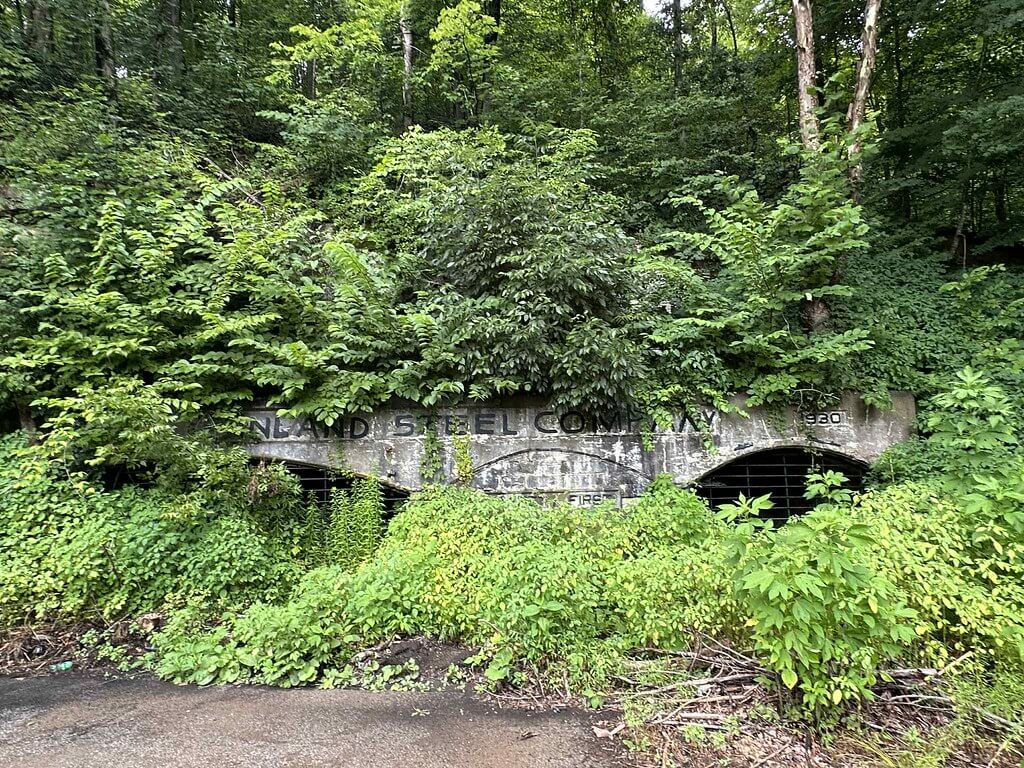
On January 30, 1930, Inland Steel Company announced that it was buying something larger than a coal mine in the mountains of Floyd County. It was buying Wheelwright itself.
The transaction included the mining operation, equipment, buildings, and much of the land on which the community had been constructed. After legal questions delayed completion of the agreement, the sale was finalized in the spring of 1930. According to the later National Register nomination for the Wheelwright Commercial District, Inland acquired approximately 1,500 acres and the buildings upon them while leasing another 11,000 acres nearby.
For a large steel producer, owning coal properties made practical industrial sense. Coal lay at the heart of the steelmaking economy, and control of a substantial eastern Kentucky operation gave Inland another connection between the Appalachian coalfields and the enormous industrial system consuming their resources. Yet what made Wheelwright unusual was what happened above ground. Rather than simply operate the mines inherited from the Elk Horn Coal Company, Inland began rebuilding the community around them.
Over the next three and a half decades, the company paved streets, installed utilities, reconstructed buildings, supported recreation, operated stores and medical facilities, and left its architectural imprint across the narrow hollow. Wheelwright became one of eastern Kentucky’s most striking examples of the company-town system, a place where the employer was not merely where a person worked. The company was woven into the physical and social structure of everyday life.
Before Inland Steel
Wheelwright had already been a coal town for more than a decade when Inland arrived. The Elk Horn Coal Company established its operation there in 1916 at the confluence of Hall and Branham branches on Otter Creek, transforming what the National Register nomination described as an isolated part of the Big Sandy Valley into an industrial settlement. Its beginnings were rough. The first housing consisted of tents and crude frame structures, while better buildings followed as materials were hauled across the mountains from the direction of Shelby Creek in neighboring Pike County.
The earliest workforce entered an equally unfinished industrial landscape. According to the history later assembled for the National Register, the first fifteen laborers worked ten-hour days for $1.75, with foremen receiving twenty-five cents more. Coal initially had to be stored while workers waited for the railroad connection that would make large-scale shipment possible.
The railroad then did more than carry coal out of Wheelwright. It carried labor into the community. Company recruiting agents brought workers from cities in the eastern United States, including immigrants who were provided subsistence until their first pay envelopes arrived. The National Register account reports that at times as many as three trains in a week brought recruited workers into the growing camp. Some eventually left, while others remained and established families whose descendants became part of the community.
By 1930, therefore, Inland Steel was not creating a town out of an empty hollow. It was acquiring an established mining community, complete with houses, commercial buildings, workers, families, and social relationships. What Inland did next was to reshape that community according to a much more ambitious corporate vision.
Rebuilding the Mine and the Town
The changes began almost immediately. Inland constructed a new tipple in 1931 and erected machine shops, but the company also invested extensively in infrastructure that reached directly into residents’ homes. A modern water filtration system was installed, streets were paved, houses received natural gas, telephones appeared, and systems were established for sewage and garbage disposal.
The scale of the sanitation work was particularly notable. The National Register documentation, relying partly on information supplied by Inland executive E. M. Pace, reported that the company spent $150,000 on a sanitation project and credited it with helping reduce Wheelwright’s high infant mortality rate. Because that assessment came through company and later preservation records, it should be understood partly as Inland’s own interpretation of its program, but the physical investment itself was substantial.
This was the kind of corporate development that could improve life while also strengthening corporate authority. Running water, cleaner streets, sewage disposal, medical services, recreation, and better housing were genuine improvements. They also meant that many of the structures surrounding a miner’s family had been provided, managed, or influenced by the same company that controlled his employment.
That tension is important to understanding Wheelwright. Inland’s years there cannot be reduced simply to exploitation, nor can they be understood only as corporate generosity. Wheelwright was a company town in the fullest meaning of the phrase. The company’s power made large improvements possible, but that same concentration of power meant work and community life could rarely be separated.
E. R. Price and the Inland Vision
One man became particularly associated with Wheelwright’s transformation. E. R. Price had arrived at Wheelwright in 1928 as manager of the Elk Horn properties and was retained when Inland Steel purchased the operation. His career had begun as a mine laborer in Pennsylvania in 1906 before he moved through engineering and management positions, including work at the Consolidation Coal properties at Van Lear in Johnson County.
Under Inland, Price became one of the central figures in Wheelwright’s development. The 1980 National Register nomination credited him with overseeing the cultural and physical improvement program and noted that residents associated much of the transformation with his leadership. He remained at Wheelwright until his retirement at the end of January 1954. Outside the company, he also served institutions including Berea College, Pine Mountain Settlement School, and Morehead State College.
Price fit the paternalistic model of industrial leadership common to many company towns. The ideal was that management should not concern itself only with tons of coal produced but with the environment surrounding the workforce. Better housing, cleaner streets, schools, medical care, organized recreation, and civic programs could improve life while producing a more stable community around the mines.
Inland Steel celebrated that philosophy openly. Lewis M. Williams’s company publication The Transformation of a Coal Mining Town presented Wheelwright as an example of what corporate planning could accomplish. The title itself revealed the message Inland hoped readers would take from the town. Wheelwright was not merely a place where the company happened to mine coal. It was presented as something the company had transformed.
The Great Modernization of 1940 and 1941
The most visible stage of Inland’s program came during 1940 and 1941. E. M. Pace later described an intensive modernization campaign that altered much of downtown Wheelwright at once.
The theater received brick veneer and a redesigned ticket booth. A new clubhouse contained a library, beauty salon, bowling alleys, recreation rooms, dining facilities, hotel rooms, and other spaces. The community building was remodeled to include a soda fountain, restaurant, barber shop, post office, and community room. The company store was renovated with groceries, hardware, and other everyday merchandise below and furniture sales upstairs. The company office was remodeled, and a swimming pool and playground were constructed.
Architect Albert Tucker of Huntington, West Virginia, was associated with the 1940 and 1941 work, while Leland Becker designed much of the brick veneering. The result was a commercial center far more architecturally coordinated than the improvised mining camp that had existed only a generation earlier.
Other buildings added to the landscape illustrate just how many functions were concentrated within the community. A Masonic Lodge dating from 1942 stood near the commercial center. A municipal building constructed in 1946 included a courtroom, jail, and space for the Women’s Club. The company office later served as a clinic. There was a gas station, dry-cleaning plant, washhouse, hospital, church, superintendent’s residence, and recreational facilities. When the original company store burned in January 1954, a new Community Shopping Center was constructed on its site in 1954 and 1955.
Wheelwright’s Main Street was therefore more than a row of businesses. It was the administrative, recreational, commercial, medical, and social center of a settlement whose reason for existence lay in the mines surrounding it.
Going Underground at Wheelwright
The polished brick buildings above ground should never obscure what sustained them. Wheelwright existed because men entered the mountain.
Few sources capture that world more vividly than the photographs Russell Lee made at Wheelwright in September 1946. Lee was working as part of the federal investigation that became the Medical Survey of the Bituminous Coal Industry, an enormous examination of health, housing, working conditions, and community life conducted after the federal government intervened during the national coal crisis of 1946. Federal investigators examined mining communities across the country while Lee documented miners and their families with his camera.
At Inland Steel’s Wheelwright No. 1 and No. 2 mines, Lee photographed coal loader Harry Fain and other miners not as anonymous figures standing outside a portal but as men moving through a working day. His photographs followed workers into the industrial spaces of the mines, onto mantrips, around machinery, and through the routines required to remove coal from beneath the mountains. The National Archives continues to preserve the larger survey, which contains more than 4,000 photographs, including an important series from Wheelwright.
Lee also photographed life outside the immediate process of production. One surviving image dated September 22, 1946, shows a local United Mine Workers of America meeting being held on Sunday morning in a Wheelwright schoolhouse. The photograph is particularly valuable because it shows that even in a community so physically shaped by Inland Steel, miners possessed an organized identity of their own.
Another Wheelwright photograph featured the family of Henry Armour, whom Lee’s caption described as one of the operation’s leading coal loaders. Other images preserved men traveling underground and families living within the community. Together they supply something that corporate reports cannot. They give faces to the workforce that made Inland’s investment worthwhile.
A Model Town, but Not the Same Town for Everyone
The phrase “model company town” can become misleading if it suggests that every resident experienced Wheelwright in the same way.
Race remained an important dividing line. The National Register documentation identifies one surviving structure as having previously served as the Black recreational building, physical evidence that recreation itself could be organized along segregated lines.
The deeper story survives in the Hall Hollow Oral History Project. Between 1985 and 1988, Wheelwright High School students interviewed Black and white residents about mining, company-town life, family, religion, segregation, and the integration of local institutions during the 1960s. The collection preserves twenty-eight interviews and provides an unusually valuable counterweight to the official company record. Instead of asking only what Inland built, the interviews allow historians to ask how residents actually experienced the community.
That difference in perspective matters. An Inland publication could point proudly to a recreational building, school, or housing program. An oral-history interview could reveal who was permitted to use a facility, where families lived, how children understood racial boundaries, or how those arrangements changed over time.
Wheelwright therefore offers a reminder that physical modernization and social equality were not the same thing. A town could possess paved streets, swimming pools, libraries, and elaborate recreational facilities while retaining racial divisions that shaped daily life.
Education, Safety, and Community Programs
Inland’s presence also reached into institutions that had little obvious connection with loading coal. Education became one example. In March 1957, The Floyd County Times reported that Inland Steel planned to continue awarding college scholarships, evidence that the company’s community program extended into educational opportunity for young people connected to Wheelwright.
Mine safety received equally public attention. A February 1957 report in the same newspaper stated that Inland had achieved the best safety record in its forty-year history of coal mining in Floyd County. Later that year, the Price No. 1 mine rescue team placed third in a national mine rescue contest in Louisville. Such reports belonged partly to the public image companies cultivated, but they also reflected a world in which mine rescue teams, safety competitions, accident prevention, and emergency preparedness were necessities rather than ceremonial programs.
The archival record behind Wheelwright is unusually rich precisely because the company involved itself in so many aspects of the settlement. The University of Kentucky’s Wheelwright Collection preserves company files touching property, buildings, maintenance, employees, retirement, medicine, accidents, and mining operations. Those records make it possible to reconstruct Wheelwright not merely as a collection of old buildings but as an operating system in which industry and community overlapped.
When Inland Steel Left
No company town could escape the fundamental weakness of company-town life. Its prosperity depended heavily upon a corporation continuing to find value in remaining there.
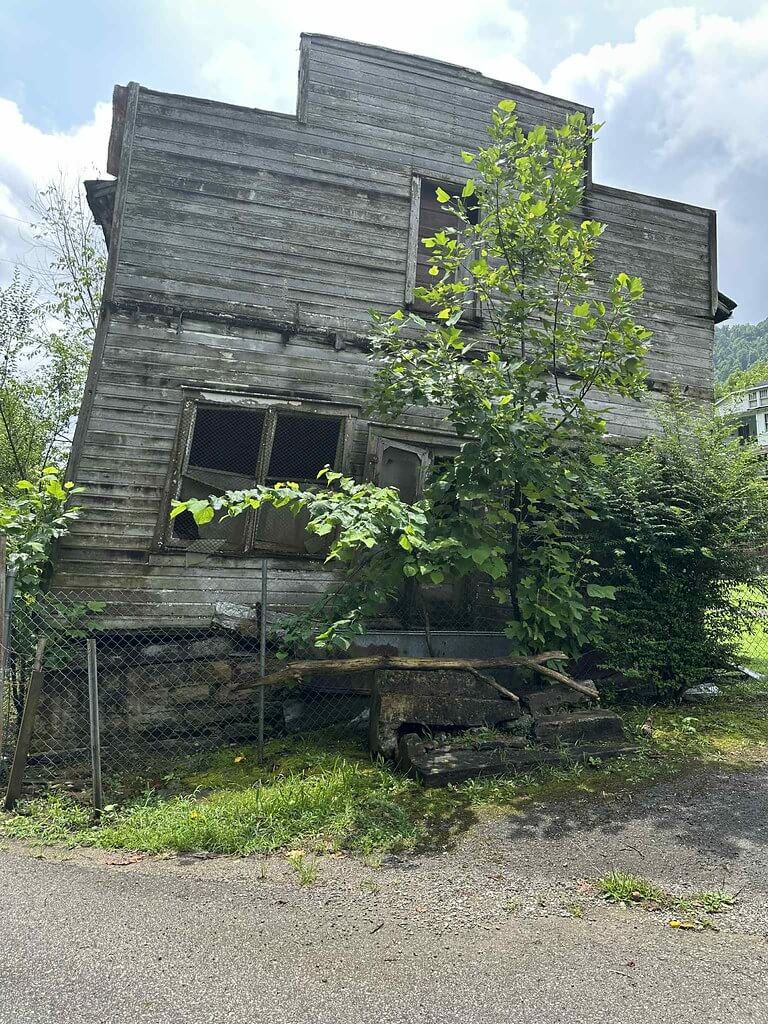
In early 1966, Inland Steel sold its large Wheelwright mining complex to Island Creek Coal Company. The sale ended approximately thirty-five years of Inland ownership and marked the beginning of a very different period in Wheelwright’s history.
The transition mattered because Inland had become much more than an employer. Its departure meant that the future of houses, utilities, commercial buildings, recreation, and community services had to be reconsidered along with the future of mining itself.
In 1969, Mountain Investments, Inc., a Florida-based company, purchased the town. A decade later, another major transition came when the Kentucky Housing Corporation purchased much of Wheelwright’s property from Mountain Investments in September 1979. The National Register nomination documented that process while contemporary Courier-Journal headlines described Wheelwright residents looking toward a future beyond the old ownership structure.
One of those newspaper stories used the striking language of “liberation.” The word reveals how complicated company-town memory could become. Inland’s period might be remembered for jobs, recreation, safe streets, schools, stores, and a carefully maintained downtown, yet the larger system still rested on corporate ownership of much of the environment in which residents lived.
The Memory of an Appalachian Camelot
That contradiction explains why Wheelwright has remained so compelling to historians.
Historian Lisa Perry described the remembered Inland period through the image of an “Appalachian Camelot.” Her research found that the thirty-five years of Inland ownership became associated in community memory with the town’s greatest period of investment, opportunity, and material improvement. For some former residents, memories of Wheelwright during those years approached an almost golden-age quality.
There were understandable reasons for that nostalgia. During the strongest years of the operation, a family in Wheelwright could find employment, shopping, medical services, organized recreation, schools, clubs, entertainment, and other services within an extraordinarily compact mountain community. The company had taken a rough early coal camp and poured money into its physical transformation.
Yet nostalgia has to be read beside the other records. Russell Lee’s photographs return attention to the miners whose labor made the town possible. Union photographs reveal workers organizing for themselves. Hall Hollow oral histories complicate any single story of community harmony. Company documents reveal both investment and extraordinary corporate reach into housing, medicine, property, and employment.
That combination is what makes Wheelwright historically valuable. It was neither simply a benevolent experiment nor simply an industrial prison. It was a real Appalachian community whose residents created families, friendships, churches, organizations, traditions, and memories inside a landscape largely constructed around the needs of coal and steel.
Why Inland Steel’s Wheelwright Matters
Wheelwright tells one of the clearest stories in eastern Kentucky of what happened when an enormous American corporation attempted to build not simply a mine but a functioning community around industrial production.
The surviving record allows that story to be viewed from several directions. Inland Steel’s publications show how the company wanted its work remembered. E. M. Pace’s account explains the enormous modernization campaign of the early 1940s. The National Register documentation preserves the physical evidence left behind. The Floyd County Times records scholarships, mine rescue teams, safety programs, workers, and community events as they happened. Russell Lee’s camera shows miners and families in 1946. The Hall Hollow interviews preserve voices capable of challenging, expanding, and humanizing the corporate account.
Together they show that the most important history of Wheelwright does not belong only to Inland Steel.
The company could build a clubhouse, pave a road, operate a hospital, construct a swimming pool, remodel a theater, or erect a new store. It could own the mine and much of the town around it. What it could not manufacture was the community itself. That belonged to the miners who traveled underground, the families who waited for them above ground, the children who grew up along the hollows, the Black residents who built community despite segregation, the union members who gathered in the schoolhouse, and the generations who continued remembering Wheelwright after Inland Steel had gone.
Inland left Floyd County decades ago, but its years at Wheelwright remain written into the town’s buildings, photographs, archives, and memories. Few places illustrate more clearly how deeply the coal industry could shape an Appalachian community, or how the people who lived inside a company town could ultimately leave behind a story much larger than the company that built it.
Sources & Further Reading
University of Kentucky Libraries, Special Collections Research Center. Wheelwright Collection, 1916–1979. Lexington: University of Kentucky. The collection includes Inland Steel Company records, property reports, employee and medical files, mine accident reports, and blueprints. https://exploreuk.uky.edu/catalog/xt7qnk361p0s/guide
Inland Steel Company. Wheelwright News. Wheelwright, KY: Inland Steel Company, December 1961; Fall 1962; November–December 1964; November–December 1965. Issues cited in the National Register documentation for Wheelwright. https://npgallery.nps.gov/GetAsset/640379e5-3775-4094-ab9d-80873bdfbe0c
Williams, Lewis M. The Transformation of a Coal Mining Town. Chicago: Inland Steel Company, n.d. Contemporary Inland Steel publication describing the company’s transformation of Wheelwright. https://archives.library.cornell.edu/repositories/4/archival_objects/1530523
Williams, Lewis M. “Transformation of a Coal Mining Town.” Mining Congress Journal, August 1943, 37–40. https://rmc.library.cornell.edu/EAD/htmldocs/KCL05956-01.html
Pace, E. M. Letter providing historical information concerning Wheelwright and Inland Steel, June 1980. Cited in the Wheelwright Commercial District National Register nomination. https://npgallery.nps.gov/GetAsset/640379e5-3775-4094-ab9d-80873bdfbe0c
National Park Service and Kentucky Heritage Commission. National Register of Historic Places Inventory-Nomination Form: Wheelwright Commercial District. 1980. The nomination documents Inland Steel’s 1930 acquisition, E. R. Price, the modernization program, commercial buildings, recreation, utilities, and the later sale of the town. https://npgallery.nps.gov/GetAsset/640379e5-3775-4094-ab9d-80873bdfbe0c
Lee, Russell. “Changing Shifts at the Mine Portal in the Afternoon. Inland Steel Company, Wheelwright #1 & 2 Mines, Wheelwright, Floyd County, Kentucky.” September 23, 1946. Records of the Solid Fuels Administration for War, National Archives. https://visit.archives.gov/galleries/russell-lee-mines
Lee, Russell. Photographs of Inland Steel Company, Wheelwright No. 1 and No. 2 Mines, September 1946. Photographs of the Medical Survey of the Bituminous Coal Industry, 1946–1947, Series 245-MS. National Archives and Records Administration. https://unwritten-record.blogs.archives.gov/2024/03/20/power-light-russell-lees-coal-survey-exhibit/
Lee, Russell. “Harry Fain, Coal Loader. Inland Steel Company, Wheelwright #1 & 2 Mines, Wheelwright, Floyd County, Kentucky.” September 23, 1946. National Archives and Records Administration. https://visit.archives.gov/galleries/russell-lee-mines
Lee, Russell. “Local UMWA Union Meeting Is Held on Sunday Morning in Schoolhouse. Inland Steel Company, Wheelwright #1 & 2 Mines.” September 22, 1946. National Archives, photograph 245-MS-3074L. https://unwritten-record.blogs.archives.gov/2024/03/20/power-light-russell-lees-coal-survey-exhibit/
United States Coal Mines Administration. A Medical Survey of the Bituminous-Coal Industry: Report of the Coal Mines Administration. Washington, DC: U.S. Government Printing Office, 1947. https://books.google.com/books?id=KFjI_euVzrYC
United States Coal Mines Administration. The Coal Miner and His Family: A Supplement to A Medical Survey of the Bituminous-Coal Industry. Washington, DC: U.S. Government Printing Office, 1947. https://docs.gato.txst.edu/747187/Lee%20Russell.pdf
Kentucky Historical Society and Kentucky Oral History Commission. Wheelwright High School: Hall Hollow Oral History Project, 1985–1988. Frankfort: Kentucky Historical Society. Twenty-eight interviews concerning mining, segregation, integration, religion, family, and company-town life. https://www.kyhistory.com/digital/collection/Ohist
Wheelwright High School. Mantrip. Spring 1989. Hall Hollow Project issue. Wheelwright, KY: Wheelwright High School. https://www.kyhistory.com/digital/collection/Ohist
Mountain Community Television. Wheelwright: Coal Mining Town. Kentucky, 1970s. Appalshop Archive. Documentary incorporating interviews with former miners and residents, historic photographs, and discussion of strikes, safety, and the sale of the town. https://archive.org/details/9291WheelwrightCoalMiningTownShort_Avg15MbpsVBR
Bryant, Geneva T. “Floyd County-Wheelwright: A Community Study on Wheelwright, Kentucky.” 1950. County Histories of Kentucky, Camden-Carroll Library, Morehead State University. https://scholarworks.moreheadstate.edu/kentucky_county_histories/24/
The Floyd County Times. Prestonsburg, KY. Historic issues concerning Inland Steel, Wheelwright, mine safety, scholarships, miners, and community events. Floyd County Public Library Digital Archive. https://fclib.org/
Dunlop, R. G. “Wheelwright Citizens Celebrate Liberation and Look to Future.” Courier-Journal, September 24, 1979, E-5. https://www.courier-journal.com/
Dunlop, R. G. “Wheelwright Is Being Turned Around to the Delight of Residents.” Courier-Journal, November 26, 1979, E-5. https://www.courier-journal.com/
Kallay, Mike. “Plans to Help in City’s Rehabilitation: KHC to Buy Half of Wheelwright.” Courier-Journal, August 3, 1979, E-4. https://www.courier-journal.com/
Sparrow, Herbert. “Housing Board Approves State Efforts to Purchase Town of Wheelwright.” Courier-Journal, June 15, 1979, E-5. https://www.courier-journal.com/
Sparrow, Herbert. “State Agency Will Own Mining Town by Tonight.” Courier-Journal, September 21, 1979, E-5. https://www.courier-journal.com/
Perry, Lisa. “Reflections on an Appalachian Camelot: Place, Memory, and Identity in the Former Company Town of Wheelwright, Kentucky, USA.” In Company Towns: Labor, Space, and Power Relations across Time and Continents, edited by Marcelo J. Borges and Susana B. Torres, 227–250. New York: Palgrave Macmillan, 2012. https://doi.org/10.1057/9781137024671_9
Schept, Judah. Coal, Cages, Crisis: The Rise of the Prison Economy in Central Appalachia. New York: New York University Press, 2022. https://nyupress.org/9781479858972/coal-cages-crisis/
Lewis, Ronald L. Black Coal Miners in America: Race, Class, and Community Conflict, 1780–1980. Lexington: University Press of Kentucky, 1987. Particularly useful for Hall Hollow, Black coal miners, segregation, and racial organization in Appalachian mining communities. https://www.kentuckypress.com/9780813192741/black-coal-miners-in-america/
Shifflett, Crandall A. Coal Towns: Life, Work, and Culture in Company Towns of Southern Appalachia, 1880–1960. Knoxville: University of Tennessee Press, 1991. https://books.google.com/books?id=yYRXBPACntAC
Eller, Ronald D. Miners, Millhands, and Mountaineers: Industrialization of the Appalachian South, 1880–1930. Knoxville: University of Tennessee Press, 1982. https://utpress.org/9780870493416/miners-millhands-and-mountaineers/
Callahan, Richard J., Jr. Work and Faith in the Kentucky Coal Fields: Subject to Dust. Bloomington: Indiana University Press, 2008. https://iupress.org/9780253352378/work-and-faith-in-the-kentucky-coal-fields/
Rennick, Robert M. Kentucky Place Names. Lexington: University Press of Kentucky, 1984. https://www.kentuckypress.com/9780813101798/kentucky-place-names/
Scalf, Henry P. Kentucky’s Last Frontier. 2nd ed. Pikeville, KY: Pikeville College Press, 1972. https://catalog.hathitrust.org/Record/006808623
Appalshop. “Archive.” Appalshop, Whitesburg, KY. The archive includes Black oral histories from coal communities including Wheelwright and other eastern Kentucky coal towns. https://appalshop.org/archive/
Wheelwright Historical Society. “Photo Galleries.” Wheelwright Historical Society. Historical photographs of Wheelwright residents, places, mining life, and schools. https://www.wheelwrighthistoricalsociety.com/photo-galleries
Author Note: Wheelwright’s history is one of the clearest examples of how a coal company could shape nearly every part of life in an Appalachian community. I wanted to look beyond the buildings Inland Steel left behind and recover the miners, families, Black residents, union members, and generations whose lives made Wheelwright more than simply a company town.