
Appalachian History Series – Bledsoe Coal Corporation: The Rise and Fall of a Leslie County Mining Complex
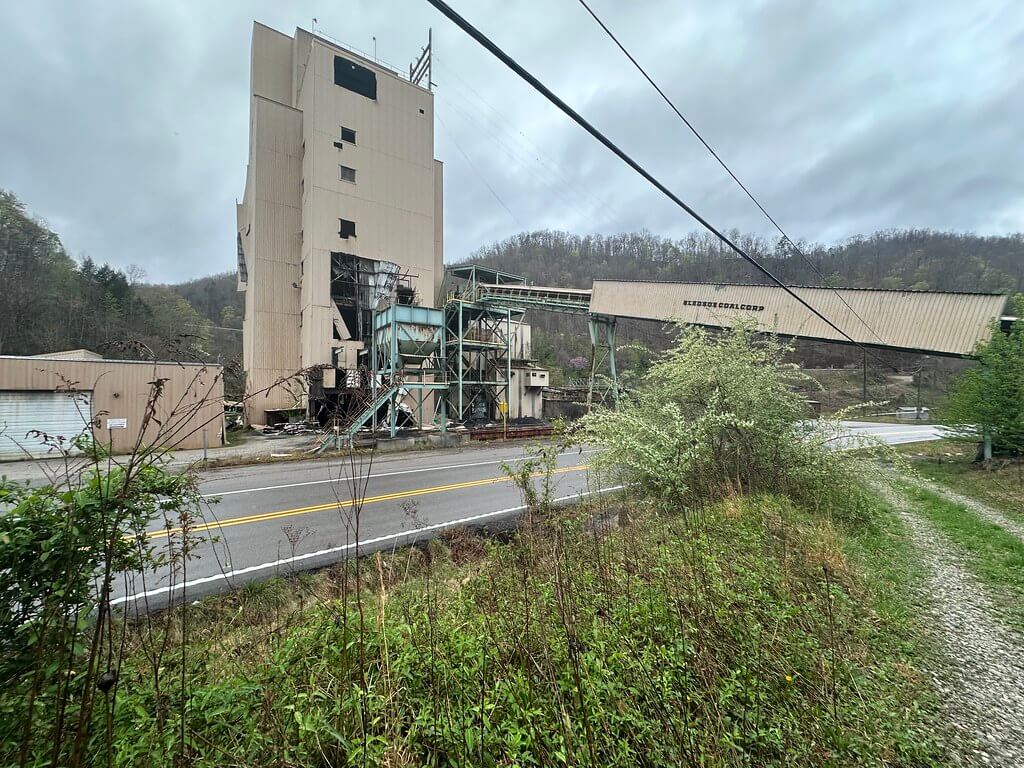
Along the mountain roads between Hyden and Harlan, the remains of the Bledsoe coal complex are difficult to miss. Concrete towers rise above the valley floor, conveyors cross the landscape, and the industrial structures that once moved coal through one of eastern Kentucky’s larger mining operations now stand mostly silent. To people in the surrounding communities, the place has long been known simply as Bledsoe Mining, but the historical record reveals something larger than a single mine or preparation plant.
Bledsoe Coal Corporation became the operating center of a network of underground mines, surface operations, preparation facilities, leases, haul roads, and rail infrastructure spread across Leslie and Harlan counties. Its mines employed hundreds of people and extracted millions of tons of eastern Kentucky coal, particularly from the Hazard No. 4 seam and related beds. Over several decades, the company also became part of a larger story of corporate consolidation, mine safety enforcement, environmental problems, federal coal leasing, bankruptcy, and the decline of Central Appalachian coal.
The surviving records are especially rich from the 1990s through the early 2010s. Yet court cases and employment records allow Bledsoe’s history to be pushed farther back, into the late 1970s and early 1980s, when the company was already becoming part of the industrial landscape of Leslie County.
Bledsoe Before James River
Pinning down Bledsoe’s earliest history requires some care because employment records, mineral leases, corporate names, and actual mining operations do not always begin at the same time.
One Kentucky Court of Appeals case provides important evidence that Bledsoe was operating as an employer by the late 1970s. Richard Dunn, who later filed a workers’ compensation claim against Bledsoe Coal Corporation and James River Coal, testified that he had worked for Bledsoe for about twenty years beginning in 1978. That testimony does not establish the company’s formal incorporation date, but it does place Bledsoe in the eastern Kentucky coal industry by that year.
Another important piece of the early history comes from a long-running Leslie County mineral dispute that eventually reached the Kentucky Supreme Court. The case concerned approximately 155 acres of coal and mineral rights claimed by competing groups of heirs. According to the court, the C.W. Hoskins heirs began leasing the property for mining in 1976 to GRI Coal Holding. In April 1980, GRI assigned that lease to Bledsoe with the approval of the Hoskins heirs. Bledsoe later surveyed property, constructed haulage roads, secured mining permits, and paid advance or minimum royalties under the lease.
The same court record is a reminder that holding coal rights did not necessarily mean immediately mining them. On the disputed Hoskins property, Bledsoe stated that it did not begin its own mining until June 1997, although other mining activity occurred on portions of the property earlier. The distinction matters because Bledsoe could control mineral acreage, build infrastructure, and prepare for future extraction years before a continuous miner entered the particular tract.
Corporate relationships were already changing by the beginning of the 1990s. A surviving coal lease originally executed between Kentucky River Coal Corporation and Shamrock Coal Company in 1982 records a December 14, 1990 assignment in which Shamrock transferred part of the lease to Bledsoe Coal Leasing Company with Kentucky River Coal’s consent. The document shows how Bledsoe expanded not only by opening mines but also by assembling mineral and property rights through transactions with other coal companies.
Another clue to the company’s corporate history appears in a 1997 Federal Mine Safety and Health Review Commission case. The proceeding identified Bledsoe Coal Corporation as formerly known as Bituminous-Laurel Mining, Inc. and concerned Bledsoe’s Mine No. 4, an underground operation in Leslie County. The surviving decision does not by itself explain every step in that corporate transition, but it establishes another predecessor name that belongs in the history of the Bledsoe operation.
By the middle of the 1990s, Bledsoe was no longer simply an independent name in the Leslie County coalfields. It had become part of a much larger corporate system.
James River Coal Takes Control
James River Coal Company’s own filings with the Securities and Exchange Commission provide the clearest account of how Bledsoe entered its corporate structure. James River reported that it acquired both the Leeco and Bledsoe operating companies when it purchased Transco Coal Company in 1995.
The transformation continued in 1999 when James River acquired Shamrock Coal Company. According to the company’s SEC filings, the Shamrock acquisition added mines, coal reserves, a preparation plant, and the Clover loadout facility to the Bledsoe complex. What had developed over earlier decades through leases and individual mining properties was being assembled into a more integrated mining system.
Federal filings from this period also clarify the corporate names that can otherwise become confusing. Bledsoe Coal Corporation was a Kentucky corporation, while Bledsoe Coal Leasing Company and Bledsoe Processing Company were separate corporate entities within the James River organization. The mines were therefore part of a broader structure involving operating companies, leasing entities, processing facilities, and the parent corporation.
For workers and residents of Leslie County, however, these distinctions were less visible than what was happening in the mountains. By the turn of the twenty-first century, Bledsoe had become a large mining complex centered on multiple underground operations working some of the most important coal seams in southeastern Kentucky.
Mine No. 4, Beechfork, Feds Creek, and Mine No. 67
Kentucky’s Department of Mines and Minerals annual report for 2001 provides one of the clearest snapshots of Bledsoe at work.
Under Leslie County, state officials listed four Bledsoe Coal Corporation underground operations: Beechfork Mine, Feds Creek, Mine No. 4, and Mine No. 67. Beechfork produced 316,728 tons that year and listed 69 employees. Feds Creek produced 373,402 tons with 58 employees. Mine No. 67 produced 337,793 tons with 32 employees.
Mine No. 4 dwarfed them all.
The state reported 1,297,652 tons of production from Mine No. 4 in 2001, with 79 employees listed for the operation. All four Leslie County mines were working the Hazard No. 4 seam, although reported seam heights varied between the individual mines. Together, the four Bledsoe listings accounted for more than 2.3 million tons of coal in a single year. Kentucky’s report also listed Bledsoe’s Bull Horn Mine in neighboring Harlan County, which produced another 463,312 tons from the Leatherwood seam.
Mine No. 4 already had a substantial regulatory paper trail. In 1996, Bledsoe petitioned the federal government for permission to use an atmospheric monitoring system at seals along an intake air course rather than relying solely on the pre-shift examination requirements normally prescribed by federal regulation. At the time, the company’s listed address was 100 Coal Drive in London, Kentucky.
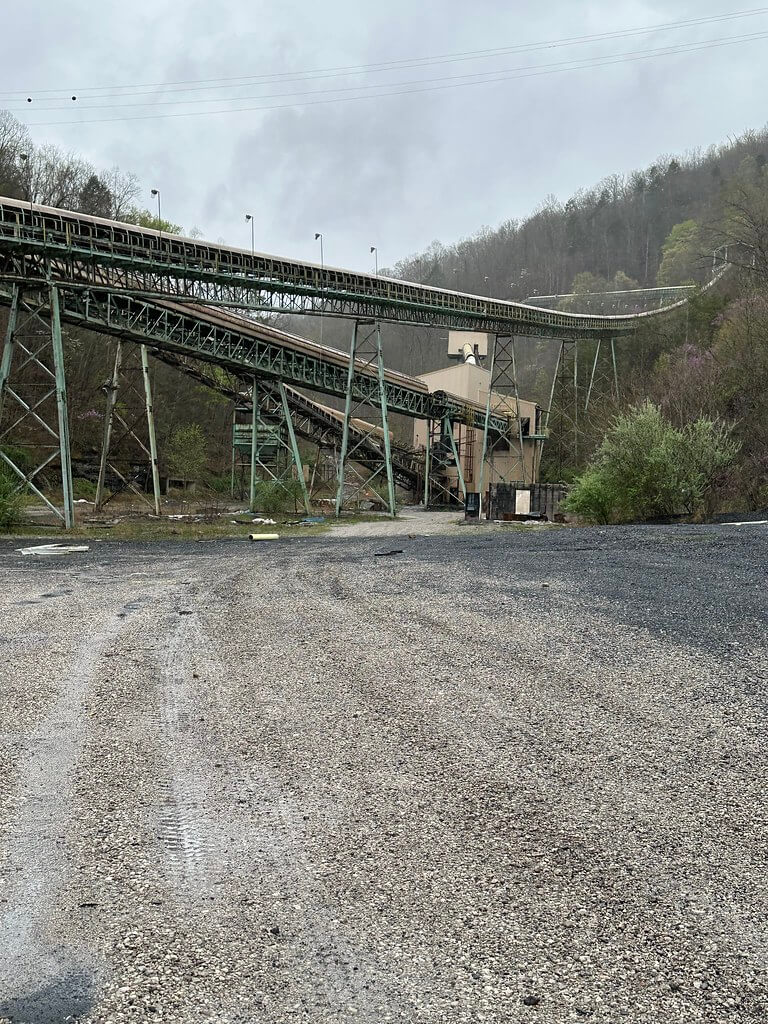
Such records illustrate how technologically complex underground mining had become. These were not small drift mines where a handful of miners loaded coal by hand. They were mechanized systems dependent on continuous miners, electrical equipment, ventilation controls, roof support, haulage systems, preparation plants, and transportation infrastructure operating together across multiple properties.
Beechfork and the Hazard No. 4 Seam
The federal investigation into a fatal accident at Beechfork Mine in 2003 provides an unusually detailed picture of a Bledsoe operation underground.
Beechfork was located near Helton in Leslie County and was owned and operated by Bledsoe Coal Corporation. The mine worked the Hazard No. 4 seam on two advancing sections using room and pillar mining, continuous mining machines, and mobile bridge continuous haulage systems.
The operation normally ran two production shifts and one maintenance shift each day, six days a week. At the time of the federal investigation, Beechfork employed 91 people and averaged approximately 4,000 tons of coal per day.
On June 20, 2003, thirty-two-year-old section foreman Jonathan W. McIntosh was killed after being run over by a battery-powered scoop underground. MSHA investigators found that only two of the machine’s four lights were operating, the lights had been relocated, and the scoop lacked reflectors on its front and rear. The investigation preserved a detailed account of the machinery, mine layout, operating conditions, and circumstances surrounding his death.
McIntosh’s death places a human story inside the enormous production figures. The hundreds of thousands of tons listed in state reports were produced shift by shift by miners working beneath the mountains, often around heavy machinery and beneath roofs and ribs that could change with little warning.
Expanding Beneath Federal Land
Bledsoe’s growth eventually brought the company into negotiations with the federal government for coal beneath publicly owned land.
In 2005, Bledsoe Coal Leasing Company sought the Gray Mountain federal coal tract in Leslie County. The tract covered approximately 1,210.40 acres in the Daniel Boone National Forest and contained coal in the Hazard No. 4 and Hazard No. 4A seams.
The Bureau of Land Management estimated that the tract contained approximately 2.9 million tons of recoverable federal coal that could be extracted by underground methods. The notice described the coal as high volatile A bituminous, the type of Central Appalachian coal that remained valuable to utility and industrial customers.
The Gray Mountain proposal demonstrates how far the underground Bledsoe system extended beyond the industrial structures visible from the highway. The economic value of the complex depended not simply on the plant and portals but on controlling sufficient coal reserves beneath thousands of acres of mountain terrain.
That need for reserves would continue almost to the end of Bledsoe’s years under James River.
Hundreds of Workers Across the Bledsoe Complex
By 2007 James River described Bledsoe as a major integrated mining complex operating in Leslie and Harlan counties.
The company reported four company-operated underground mines and one company-operated surface mine. Underground operations principally worked Hazard No. 4, while surface mining reached additional Hazard seams. Coal from the complex passed through one of two preparation plants before being moved to a separate CSX rail loadout.
At the end of 2007, James River reported 390 mining and support employees at Bledsoe.
Three years later, the system remained substantial. James River’s 2010 annual filing reported that Bledsoe was working the Hazard No. 4 and Hazard No. 4 Rider seams, processing coal through two preparation plants, and loading railcars through a four-hour unit-train loadout on CSX. The company listed 357 mining and support personnel at the complex at the end of the year.
Kentucky’s own 2010 records identify several of the mines behind those numbers. Abner Branch Rider produced 223,475 tons, Beechfork produced 574,629 tons, Oldhouse Branch produced 181,467 tons, and Tantrough produced 161,961 tons. Beechfork alone listed 107 employees.
Bledsoe had become exactly what the word “complex” suggested: several mines spread through separate hollows and branches, connected economically through common ownership, processing, transportation, management, and coal reserves.
The Death of Travis Brock at Abner Branch Rider
One of the best documented tragedies in Bledsoe’s history occurred at Abner Branch Rider on January 22, 2010.
Travis G. Brock, a twenty-nine-year-old continuous miner operator with twelve years of mining experience, was working underground when a massive section of coal rib broke loose. The preliminary federal fatality notice described the fallen section as approximately seventy inches high, sixty-three inches long, and 103 inches wide. Brock was struck and pinned against the mine floor.
The final federal investigation identified Abner Branch Rider as a Bledsoe Coal Corporation operation in Big Laurel, Leslie County. Later litigation arising from the accident stated that the material that crushed Brock was estimated to weigh approximately 9.3 tons.
His death became part of a much larger examination of safety conditions at Abner Branch.
Federal regulators had begun looking closely at the mine’s compliance record. On November 18, 2010, Bledsoe received notice that Abner Branch Rider met the criteria for a potential pattern of significant and substantial violations. Following further review and a corrective-action process, MSHA formally placed the mine on a Pattern of Violations on April 12, 2011.
The designation was historically significant. Federal officials later described Abner Branch Rider and the Apache Mine in West Virginia as the first mines in the history of the Mine Act to become subject to the full effects of Pattern of Violations enforcement.
Federal Inspectors Return to Abner Branch
The scrutiny continued.
On October 31, 2011, federal inspectors conducted an impact inspection at Abner Branch Rider. According to the Department of Labor, inspectors took control of the mine telephone to prevent advance warning of their arrival.
Inside, they reported loose and unsupported drawrock, loose coal ribs, combustible material accumulations, and problems with required pre-shift examinations. Inspectors issued five withdrawal orders and two citations.
The inspection was part of a larger regulatory struggle between Bledsoe and federal mine safety authorities. Cases before the Federal Mine Safety and Health Review Commission examined numerous citations at Abner Branch and Mine No. 4, including roof and rib control, accumulations, escapeway protections, and other mandatory standards.
Bledsoe challenged some of those findings and prevailed on some individual issues, while others were sustained. The surviving decisions provide something more valuable to historians than a simple tally of citations. They preserve testimony about conditions underground and show how miners, company officials, inspectors, engineers, and attorneys understood the risks of operating a large mechanized mine complex.
Mine Water and Greasy Creek
Bledsoe’s influence on Leslie County also extended beyond employment and underground mining.
Kentucky environmental regulators reported that Bledsoe Coal’s Leslie County operations experienced two releases that each affected Greasy Creek for approximately nine miles. The company attended an enforcement conference in July 2009, submitted a spill prevention, control, and countermeasure plan, agreed to train relevant employees, and paid a $15,000 penalty in September.
A later federal technical evaluation of uncontrolled mine-water releases recorded another striking event from the same period. The Bureau of Reclamation listed a March 2009 incident at a Bledsoe Coal Corporation mine in Leslie County where older mine workings reportedly blew out and released water at approximately 10,000 gallons per minute.
These incidents illustrate one of the less visible legacies of underground coal mining. Even after sections of a mine were no longer producing coal, water could accumulate behind old workings, seals, barriers, and collapsed areas. A mine could therefore continue interacting with the surrounding watershed long after miners had moved into another section.
One More Attempt to Expand Beechfork
Even as Central Appalachian coal entered a difficult economic period, Bledsoe continued seeking additional reserves.
In 2013, the Bureau of Land Management considered another application involving the Bledsoe/Beechfork Mine. The federal tract lay approximately ten miles south of Hyden on National Forest lands and included property associated with Beech Fork, Caywood Creek, Upper Double Branch, Trace Branch, and the Greasy Fork watershed.
Bledsoe proposed using the tract as an extension of its existing Beechfork Mine. Unlike the earlier Gray Mountain tract centered on Hazard No. 4 coal, this proposed lease involved the Fire Clay seam and contained more than 400,000 tons of estimated recoverable coal.
The application showed that Bledsoe still possessed a substantial underground mining system capable of reaching additional federal coal. Yet the application came at almost exactly the moment when the economics of James River Coal were beginning to unravel.
Bankruptcy Comes to Bledsoe
On April 7, 2014, James River Coal Company and its wholly owned subsidiaries filed for Chapter 11 bankruptcy protection in the United States Bankruptcy Court for the Eastern District of Virginia.
Bledsoe Coal Corporation and Bledsoe Coal Leasing Company were among the individual debtor companies. Bankruptcy records assigned Bledsoe Coal Corporation case number 14-31852 and Bledsoe Coal Leasing Company case number 14-31853.
The bankruptcy came during a severe period for Central Appalachian coal producers. Competition from natural gas, changing electricity markets, declining demand for some Appalachian steam coal, high mining costs, and increasingly difficult reserves put pressure on companies that had spent years consolidating operations and acquiring coal acreage.
For Bledsoe, corporate restructuring ultimately meant another change of ownership.
James River reached an agreement in December 2014 to sell the Bell and Bledsoe complexes to Revelation Energy. The transaction also included certain Laurel Mountain Resources assets. Revelation’s bid involved $2 million in cash, assumed liabilities, and other specified consideration.
The bankruptcy court approved the sale on December 29. It closed on December 31, 2014. James River reported afterward that it had no remaining mining operations.
For Bledsoe, the closing marked the end of nearly twenty years inside the James River Coal system.
Reading the Bledsoe Complex Today
The quiet industrial structures left in the mountains can make Bledsoe appear to be the remains of one abandoned coal plant. The surviving record tells a much larger story.
By the late 1970s, workers were already associating their employment with Bledsoe. By 1980, the company held Leslie County mining rights through assigned leases. During the 1980s and early 1990s, additional mineral and property arrangements helped enlarge that footprint. James River acquired Bledsoe through Transco in 1995, then expanded the complex through the acquisition of Shamrock in 1999.
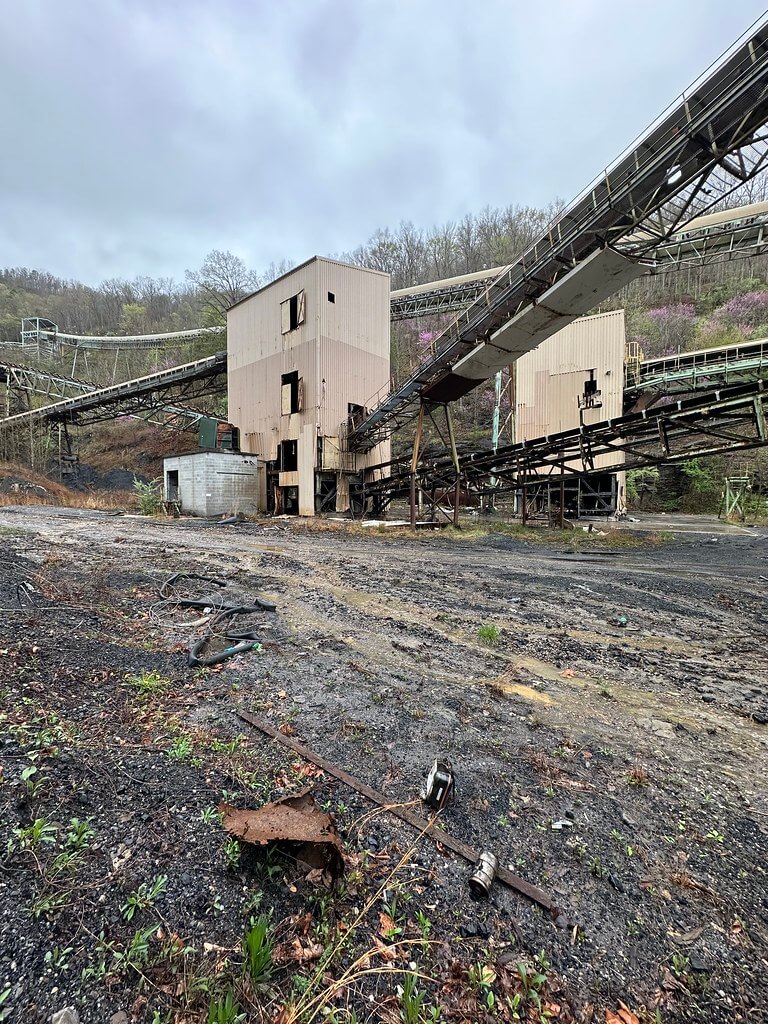
At its height, Bledsoe was not one mine but an interconnected industrial system. Mine No. 4, Beechfork, Feds Creek, Mine No. 67, Abner Branch Rider, Oldhouse Branch, Tantrough, Bull Horn, and other operations opened into different parts of the eastern Kentucky coalfield. Preparation plants cleaned the coal. Haulage systems moved it. The Clover loadout connected it to the railroad. Mineral leases extended underground beneath private and federal land.
Hundreds of miners and support workers depended upon those operations. State reports counted production in the hundreds of thousands, and sometimes more than a million, tons at individual mines. Federal accident investigations, meanwhile, recorded the names of miners such as Jonathan McIntosh and Travis Brock, reminding us that every production figure represented people working underground.
The same documentary trail records the costs of mining. Greasy Creek received mine-related pollution. An uncontrolled release sent thousands of gallons of mine water per minute from old workings. Federal inspectors repeatedly entered Bledsoe mines to investigate problems with roofs, ribs, ventilation, accumulation, examinations, and escapeways. Abner Branch Rider eventually became one of the first mines subjected to the full Pattern of Violations provisions of federal mine law.
Then came bankruptcy and another corporate sale.
Why Bledsoe Matters to Appalachian History
Bledsoe Coal Corporation is important because its history captures much of the late twentieth and early twenty-first century Appalachian coal story in one place.
Its earliest surviving records show the complicated world of mineral deeds, family-held coal rights, leases, royalties, and corporate assignments that determined who could mine beneath the mountains. Its expansion under James River illustrates the consolidation of eastern Kentucky coal properties into larger corporate systems. Its state production records show the remarkable quantity of coal that could leave one Appalachian valley during the industry’s stronger years.
Its MSHA files reveal the underground reality behind those numbers, where continuous miners and haulage systems increased production but could never eliminate the dangers posed by machinery, roof, ribs, methane, dust, and human error. Its environmental files demonstrate that underground mining also transformed the streams and water systems outside the portals. Finally, its bankruptcy and sale to Revelation Energy show how quickly a massive industrial network could unravel when the economics of Appalachian coal changed.
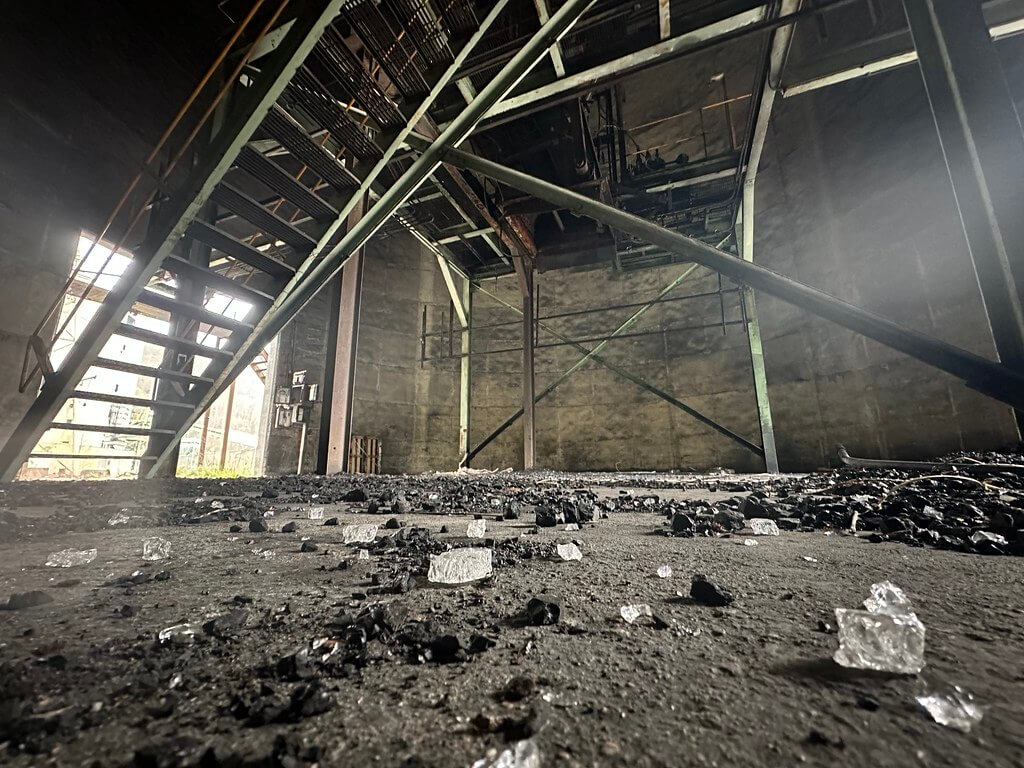
Today the remaining Bledsoe structures stand as physical evidence of that history. Their conveyors and preparation facilities are not simply abandoned industrial ruins. They are the surviving center of a coal complex that once extended for miles beneath the mountains, employed hundreds of eastern Kentuckians, produced millions of tons of coal, and generated a documentary record stretching from Leslie County deed books to the United States Supreme Court’s regulatory world of federal mining law.
The history of Bledsoe is therefore larger than the history of one corporation. It is a history of mineral ownership, labor, mechanization, corporate power, public land, environmental change, danger, and economic dependence in the eastern Kentucky coalfields. In the silent machinery left behind, Leslie County retains one of the region’s clearest reminders of how deeply the coal industry once reached into both the mountains and the lives of the people who worked beneath them.
Sources & Further Reading
James River Coal Company. “Form S-1/A Registration Statement.” May 23, 2005. U.S. Securities and Exchange Commission. Accessed October 28, 2026. https://www.sec.gov/Archives/edgar/data/1297720/000114544305001220/d17147.htm
James River Coal Company. “Annual Report on Form 10-K.” 2006. U.S. Securities and Exchange Commission. Accessed October 28, 2026. https://www.sec.gov/Archives/edgar/data/1297720/000118811206000708/t9298_10k.htm
James River Coal Company. “Annual Report on Form 10-K.” 2007. U.S. Securities and Exchange Commission. Accessed October 28, 2026. https://www.sec.gov/Archives/edgar/data/1297720/000118811207000713/t13309_10k.htm
James River Coal Company. “Annual Report on Form 10-K.” 2008. U.S. Securities and Exchange Commission. Accessed October 28, 2026. https://www.sec.gov/Archives/edgar/data/1297720/000101968708000964/jrcc_10k-123107.htm
James River Coal Company. “Annual Report on Form 10-K for the Fiscal Year Ended December 31, 2010.” 2011. U.S. Securities and Exchange Commission. Accessed October 28, 2026. https://www.sec.gov/Archives/edgar/data/1297720/000101968711000808/jrcc_10k-123110.htm
James River Coal Company. “Exhibit 21: Subsidiaries.” U.S. Securities and Exchange Commission. Accessed October 28, 2026. https://www.sec.gov/Archives/edgar/data/704870/000101968713002375/jrcc_s4-ex21.htm
James River Coal Company. “Credit Agreement Exhibit.” 2010. U.S. Securities and Exchange Commission. Accessed October 28, 2026. https://www.sec.gov/Archives/edgar/data/1297720/000101968710000388/jrcc_8k-ex1001.htm
James River Coal Company. “Current Report Concerning Pattern of Violations at Abner Branch Rider Mine.” April 2011. U.S. Securities and Exchange Commission. Accessed October 28, 2026. https://www.sec.gov/Archives/edgar/data/1297720/000101968711001220/jrcc_041211.htm
James River Coal Company. “Current Report on Form 8-K: Sale of Bell and Bledsoe Complexes to Revelation Energy.” January 2015. U.S. Securities and Exchange Commission. Accessed October 28, 2026. https://www.sec.gov/Archives/edgar/data/1297720/000101968715000124/jrcc_8k.htm
James River Coal Company. “Bankruptcy Schedules and Corporate Records.” 2014. U.S. Securities and Exchange Commission. Accessed October 28, 2026. https://www.sec.gov/Archives/edgar/data/1297720/000101968714002952/ex9901.htm
Kentucky Department of Mines and Minerals. Annual Report, 2001. Frankfort: Commonwealth of Kentucky, 2001. Accessed October 28, 2026. https://eec.ky.gov/Natural-Resources/Mining/Mine-Safety/safety-inspections-and-licensing/Annual%20Reports/2001%20Annual%20Report.pdf
Kentucky Office of Mine Safety and Licensing. Annual Report, 2003. Frankfort: Commonwealth of Kentucky, 2003. Accessed October 28, 2026. https://eec.ky.gov/Natural-Resources/Mining/Mine-Safety/safety-inspections-and-licensing/Annual%20Reports/2003%20Annual%20Report.pdf
Kentucky Office of Mine Safety and Licensing. Annual Report, 2004. Frankfort: Commonwealth of Kentucky, 2004. Accessed October 28, 2026. https://eec.ky.gov/Natural-Resources/Mining/Mine-Safety/safety-inspections-and-licensing/Annual%20Reports/2004%20Annual%20Report.pdf
Kentucky Office of Mine Safety and Licensing. Annual Report, 2005. Frankfort: Commonwealth of Kentucky, 2005. Accessed October 28, 2026. https://eec.ky.gov/Natural-Resources/Mining/Mine-Safety/safety-inspections-and-licensing/Archived_Annual_Reports/2005%20Annual%20Report.pdf
Kentucky Office of Mine Safety and Licensing. Annual Report, 2010. Frankfort: Commonwealth of Kentucky, 2010. Accessed October 28, 2026. https://eec.ky.gov/Natural-Resources/Mining/Mine-Safety/safety-inspections-and-licensing/Archived_Annual_Reports/2010%20Annual%20Report.pdf
Kentucky Office of Mine Safety and Licensing. Annual Report, 2013. Frankfort: Commonwealth of Kentucky, 2013. Accessed October 28, 2026. https://eec.ky.gov/Natural-Resources/Mining/Mine-Safety/safety-inspections-and-licensing/Archived_Annual_Reports/2013%20Annual%20Report.pdf
Kentucky Division of Mine Safety. Annual Report, 2014. Frankfort: Commonwealth of Kentucky, 2014. Accessed October 28, 2026. https://eec.ky.gov/Natural-Resources/Mining/Mine-Safety/safety-inspections-and-licensing/Annual%20Reports/2014%20Annual%20Report.pdf
Kentucky Energy and Environment Cabinet. “Permitting Actions, April 2014.” Frankfort: Commonwealth of Kentucky, 2014. Accessed October 28, 2026. https://eec.ky.gov/Natural-Resources/Mining/Mine-Permits/Monthly%20Permitting%20Actions/Permitting%20Actions%20April%202014.pdf
Kentucky Department for Environmental Protection, Division of Enforcement. Annual Report, Fiscal Year 2010. Frankfort: Kentucky Energy and Environment Cabinet, 2010. Accessed October 28, 2026. https://eec.ky.gov/Environmental-Protection/2010%20Annual%20Reports/Annual%20Report%20FY2010.pdf
Mine Safety and Health Administration. Report of Investigation: Fatal Powered Haulage Accident, Beechfork Mine, Bledsoe Coal Corporation, Helton, Leslie County, Kentucky, June 20, 2003. Arlington, VA: U.S. Department of Labor, 2003. Accessed October 28, 2026. https://arlweb.msha.gov/FATALS/2003/ftl03c17.pdf
Mine Safety and Health Administration. Report of Investigation: Fatal Fall of Face, Rib, or Pillar, Abner Branch Rider Mine, Bledsoe Coal Corporation, January 22, 2010. Arlington, VA: U.S. Department of Labor, 2010. Accessed October 28, 2026. https://www.msha.gov/sites/default/files/Data_Reports/Fatals/Coal/2010/ftl10c02.pdf
Mine Safety and Health Administration. “Coal Mine Fatality No. 2: Abner Branch Rider, Bledsoe Coal Corporation.” January 22, 2010. U.S. Department of Labor. Accessed October 28, 2026. https://www.msha.gov/sites/default/files/Data_Reports/Fatals/Coal/2010/fab10c02.pdf
Mine Safety and Health Administration. “Coal Mining Fatality Reports for 2010.” U.S. Department of Labor. Accessed October 28, 2026. https://arlweb.msha.gov/fatals/indices/FABC2010.asp
Federal Mine Safety and Health Review Commission. Steve Napier v. Bledsoe Coal Corp., f/k/a Bituminous-Laurel Mining, Inc. KENT 96-269-D. March 12, 1997. Accessed October 28, 2026. https://www.fmshrc.gov/sites/default/files/decisions/alj/k96-269d.pdf
Federal Mine Safety and Health Review Commission. Bledsoe Coal Corporation, Mine No. 4. November 14, 2011. Accessed October 28, 2026. https://fmshrc.gov/sites/default/files/decisions/alj/ALJ.11142011-KENT%202008-808.htm
Federal Mine Safety and Health Review Commission. Bledsoe Coal Corporation v. Secretary of Labor: Abner Branch Rider Mine. May 11, 2012. Accessed October 28, 2026. https://fmshrc.gov/sites/default/files/decisions/alj/ALJ_05122012-KENT%202011-972.htm
Federal Mine Safety and Health Review Commission. Bledsoe Coal Corporation: Abner Branch Rider Mine. October 2012. Accessed October 28, 2026. https://www.fmshrc.gov/sites/default/files/decisions/bluebooks/Oct.%202012.pdf
Federal Mine Safety and Health Review Commission. Secretary of Labor v. Paul D. Bentley. November 5, 2013. Accessed October 28, 2026. https://www.fmshrc.gov/sites/default/files/decisions/alj/ALJ_11052013-KENT%202013-307_1.pdf
U.S. Department of Labor. “MSHA Announces Results of October Impact Inspections.” November 22, 2011. Accessed October 28, 2026. https://www.dol.gov/newsroom/releases/msha/msha20111122
U.S. Department of Labor. “Two Mines Become First in History to Be Subject to Mine Act’s Pattern of Violations Enforcement Action.” November 30, 2011. Accessed October 28, 2026. https://www.dol.gov/newsroom/releases/msha/msha20111130
U.S. Department of the Interior, Bureau of Land Management. “Competitive Coal Lease Sale, Gray Mountain Federal Mineral Tract, KYES-51002, Leslie County, Kentucky.” Federal Register 70, no. 124 (June 29, 2005). Accessed October 28, 2026. https://www.govinfo.gov/content/pkg/FR-2005-06-29/pdf/FR-2005-06-29.pdf
Bureau of Land Management. Eastern States Coal Lease Statistics. U.S. Department of the Interior. Accessed October 28, 2026. https://www.blm.gov/sites/default/files/docs/2021-02/BLM%20Eastern%20States%20State%20Coal%20Statistics.pdf
Bureau of Land Management. “KYES-53865: Bledsoe Coal Leasing Company.” U.S. Department of the Interior. Accessed October 28, 2026. https://www.blm.gov/sites/default/files/docs/2021-02/KYES-53865.pdf
U.S. Department of the Interior, Bureau of Land Management. “Notice of Intent to Prepare an Environmental Assessment and Notice of Public Meeting for the Bledsoe-Beechfork Federal Coal Lease Application, Kentucky.” Federal Register. June 24, 2013. Accessed October 28, 2026. https://www.govinfo.gov/content/pkg/FR-2013-06-24/pdf/2013-14990.pdf
U.S. Government Accountability Office. Coal Leasing: BLM Could Enhance Appraisal Process, More Explicitly Consider Coal Exports, and Provide More Public Information. GAO-14-140. Washington, DC: U.S. Government Accountability Office, 2013. Accessed October 28, 2026. https://www.gao.gov/assets/gao-14-140.pdf
C.W. Hoskins Heirs v. Boggs. 242 S.W.3d 320 (Ky. 2007). Supreme Court of Kentucky. Accessed October 28, 2026. https://law.justia.com/cases/kentucky/supreme-court/2007/2005-sc-000618-dg.html
C.W. Hoskins Heirs v. Boggs. Kentucky Court of Appeals, 2011. Accessed October 28, 2026. https://law.justia.com/cases/kentucky/court-of-appeals/2011/2010-ca-001339-mr-0.html
Kentucky River Coal Corporation and Shamrock Coal Company. “Coal Mining Lease, June 30, 1982, and Assignment and Consent to Bledsoe Coal Leasing Company, December 14, 1990.” Accessed October 28, 2026. https://contracts.justia.com/companies/international-coal-group-inc-33280/contract/809681/
Dunn v. Bledsoe Coal Corporation/James River Coal. Kentucky Court of Appeals, 2014. Accessed October 28, 2026. https://law.justia.com/cases/kentucky/court-of-appeals/2014/2013-ca-000745-wc.html
U.S. Department of Labor, Benefits Review Board. Lowe v. Bledsoe Coal Corporation/James River Coal. 2004. Accessed October 28, 2026. https://www.dol.gov/sites/dolgov/files/brb/decisions/blklung/unpublished/Jun04/03-0810.pdf
U.S. Department of Labor, Office of Workers’ Compensation Programs. Black Lung Benefits Bulletin No. 16-03. April 14, 2016. Accessed October 28, 2026. https://www.dol.gov/sites/dolgov/files/owcp/dcmwc/blba/indexes/BL16.03OCR.pdf
U.S. Bureau of Reclamation. Technical Evaluation of the Gold King Mine Incident. U.S. Department of the Interior, 2015. Accessed October 28, 2026. https://www.usbr.gov/main/qoi/docs/goldkingminereport.pdf
Csejtey, Béla, Jr. Geologic Map of the Bledsoe Quadrangle, Southeastern Kentucky. Geologic Quadrangle Map GQ-889. Washington, DC: U.S. Geological Survey, 1971. Accessed October 28, 2026. https://pubs.usgs.gov/publication/gq889
Rice, Dudley D. Geologic Map of the Helton Quadrangle, Southeastern Kentucky. Geologic Quadrangle Map GQ-1227. Reston, VA: U.S. Geological Survey, 1975. Accessed October 28, 2026. https://pubs.usgs.gov/publication/gq1227
U.S. Geological Survey. Bledsoe, Kentucky, 7.5-Minute Topographic Quadrangle. 1980 ed. Accessed October 28, 2026. https://prd-tnm.s3.amazonaws.com/StagedProducts/Maps/HistoricalTopo/PDF/KY/24000/KY_Bledsoe_708195_1980_24000_geo.pdf
Author’s Note: Bledsoe Coal Corporation’s history reaches far beyond the abandoned structures still visible in Leslie County, connecting generations of miners to changing coal markets, corporate ownership, federal regulation, and the Hazard No. 4 seam beneath the mountains. I hope this article helps preserve both the industrial history of the Bledsoe complex and the experiences of the people whose work made it one of southeastern Kentucky’s major coal operations.